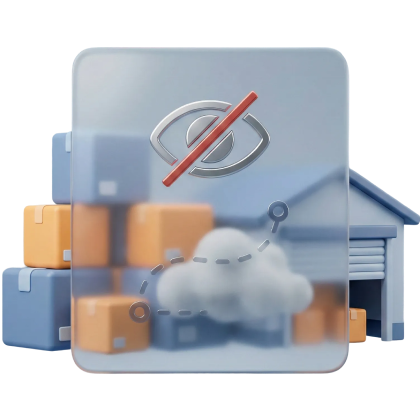



Delayed shipment, unexpected stockouts, and supplier disruptions are often the symptoms of a deeper problem - lack of supply chain visibility. When businesses cannot track inventory, suppliers, shipments, and operations in real-time, even small issues can turn into costly disruptions.
For retailers, manufacturers, distributors, and logistics teams, visibility is no longer optional. It plays a critical role in reducing risk, improving efficiency, and meeting customer expectations. Hence, understanding the impact of poor visibility is the first step towards building a more resilient, efficient, and data-driven supply chain.
In this guide, we'll explore the hidden risks of poor supply chain visibility, its impact on business performance, and practical strategies, technologies, and AI-driven solutions to improve visibility in 2026.
- Poor visibility increases the risk of delays and stockouts
- Limited supplier insights can lead to costly disruptions
- Real-time data improves forecasting and inventory planning
- AI-powered visibility tools help identify risks before they escalate
- End-to-end supply chain visibility is becoming a business necessity in 2026
What Does Supply Chain Visibility Really Mean?
Supply chain visibility means being aware of what exactly is happening at every stage of your product's journey. This means having real-time access to inventory levels, shipment locations, and supplier performance, so that you can anticipate potential issues before they escalate. When you actually oversee your supply chain management, the decisions become proactive, so that you can save time and money.
In practice, supply chain visibility spans multiple layers, including inventory visibility, logistics visibility, supplier visibility, demand visibility, and production visibility. Altogether, these visibility types give businesses a complete end-to-end view of operations, making it even easier to act fast and stay in control.
Beyond just tracking goods, visibility is all about understanding the flow of info, spotting flaws, and responding to disruptions much quickly. High visibility allows businesses to optimize resources, minimize delays, and maintain customer trust.
Quick Definition
Supply chain visibility is the ability to track inventory, suppliers, shipments, and operational activities across the supply chain in real time. Thus enabling businesses to identify risks, improve decision-making, and optimize performance.
The 5 Pillars of Effective Supply Chain Visibility
Achieving end-to-end supply chain visibility needs more than just tracking shipments. Organizations need a comprehensive view of inventory, suppliers, logistics, demand, and potential risks across the entire supply chain network. Businesses that strengthen these five pillars can make faster decisions, reduce disruptions, and improve operational efficiency.
1. Inventory Visibility
Inventory visibility helps businesses track stock levels across warehouses, stores, and distribution centres in real time. This reduces stockouts, prevents overstocking, and improves order fulfilment.
Key Benefits:
- Real-time inventory tracking
- Reduced stockouts and excess inventory
- Improved demand planning
- Better order fulfilment accuracy
2. Supplier Visibility
Supplier visibility gives details like supplier performance, lead times, production status, and potential disruptions. It helps businesses identify risks early and maintain a reliable supply chain.
Key Benefits:
- Improved supplier collaboration
- Early detection of supply risks
- Better compliance monitoring
- Stronger sourcing decisions
3. Logistics Visibility
Logistics visibility helps companies monitor shipments, delivery timelines, and transportation performance. Real-time tracking helps reduce delays and improve customer satisfaction.
Key Benefits:
- Real-time shipment tracking
- Faster response to disruptions
- Improved delivery performance
- Enhanced customer communication
4. Demand Visibility
Demand visibility uses sales data and market trends to forecast future demand. Accurate forecasting helps businesses plan inventory, production, and resources more effectively.
Key Benefits:
- More accurate demand forecasting
- Better inventory allocation
- Reduced waste and excess stock
- Improved production planning
5. Risk Visibility
Risk visibility helps organizations identify and monitor potential disruptions such as supplier issues, transportation delays, regulatory changes, or unexpected market events before they impact operations.
Key Benefits:
- Proactive risk management
- Faster disruption response
- Improved business continuity
- Stronger operational resilience
Why These Five Pillars Matter
Organizations often focus on only one aspect of visibility, such as inventory tracking or shipment monitoring. However, true end-to-end supply chain visibility needs all five pillars to work together. When combined with AI-powered analytics, predictive intelligence, and real-time data integration, these pillars help businesses reduce uncertainty, improve agility, and build a more resilient supply chain in 2026 and beyond.
Quick Assessment
Ask yourself:
- Can you track inventory in real time?
- Do you have visibility into supplier performance and risks?
- Can you monitor shipments throughout their journey?
- Are your demand forecasts data-driven and accurate?
- Can you identify disruptions before they impact operations?
If the answer is "no" to any of these questions, your organization has supply chain visibility gaps that possibly affect efficiency, customer satisfaction, and profitability.
Supply Chain Visibility vs Supply Chain Transparency
Although the terms are often used interchangeably, supply chain visibility and supply chain transparency serve different purposes.
Supply chain visibility focuses on offering businesses real-time operational insights into inventory, logistics, supplier performance, and order fulfilment. It helps organizations understand what is happening within the supply chain and respond quickly to disruptions.
Whereas, supply chain transparency focuses on sharing information with external stakeholders. This includes customers, regulators, investors, and partners. Transparency often covers disclosures related to sourcing practices, sustainability efforts, labour standards, and regulatory compliance.
While visibility helps businesses improve operational efficiency, transparency helps build trust, ensure compliance, and support ethical business practices.
Primary Goal
Supply Chain Visibility
Operational control and decision-making
Supply Chain Transparency
Stakeholder trust and accountability
Focus Area
Supply Chain Visibility
Internal supply chain operations
Supply Chain Transparency
External communication and reporting
Real-Time Tracking
Supply Chain Visibility
Yes
Supply Chain Transparency
Limited
Inventory & Logistics Monitoring
Supply Chain Visibility
Yes
Supply Chain Transparency
No
Supplier Performance Analysis
Supply Chain Visibility
Yes
Supply Chain Transparency
Partial
ESG & Sustainability Reporting
Supply Chain Visibility
Limited
Supply Chain Transparency
Strong
Key Benefit
Supply Chain Visibility
Faster response to disruptions
Supply Chain Transparency
Improved trust and compliance
2026 Supply Chain Visibility Statistics, Trends, & Insights
As supply chains become more connected, businesses are investing in better visibility and decision-making tools. However, many still struggle with end-to-end visibility, making it harder to manage disruptions and reduce risks.
of organizations fully integrate scenario planning into their supply chain strategies, limiting their ability to respond proactively to disruptions. Source: Gartner
of supply chain organizations have developed the capabilities needed to achieve future-ready performance, highlighting significant operational maturity gaps. Source: Gartner
of supply chain leaders adopting AI report confidence in managing future supply chain challenges, compared with only 54% among organizations lagging in AI adoption. Source: Gartner
of supply chain leaders consider digital supply chain visibility a top priority, reflecting the growing importance of real-time operational insights. Source: LinkedIn
of companies report visibility beyond Tier-1 suppliers, despite 95% having visibility into their direct suppliers. Source: LinkedIn
of supply chain disruptions will be resolved without human intervention by 2031, driven by AI-enabled autonomous supply chains. Source: Gartner
What These Statistics Mean for Businesses
The above data shows a clear pattern: organizations recognize the importance of supply chain visibility, while many still work with limited visibility across supplier networks, logistics operations, inventory movement, and risk management processes. In 2026, leading organizations rely on AI, predictive analytics, and autonomous decision-making systems to anticipate disruptions before they impact customers, operations, or revenue.
The Hidden Impact of Limited Supply Chain Visibility
Lack of supply chain visibility affects much more than inventory tracking. When businesses cannot see what is happening across suppliers, inventory, shipments, and operations in real-time, even small issues can quickly turn into major disruptions.
When there is no accurate and timely data, teams often end up reacting to problems after they occur instead of preventing them. As businesses rely more on digital and AI-powered supply chains, real-time visibility is now a must-have.
1. Inventory Stockouts and Excess Inventory
Without clear visibility into inventory levels, businesses may find it difficult to maintain the right stock levels. This often leads to stockouts that impact sales & customer satisfaction or excess inventory that increases storage costs & ties up working capital.
However, with real-time inventory visibility, businesses can improve inventory planning, reduce waste, and maintain a healthier balance between supply and demand.
2. Delivery Delays and Supply Chain Disruptions
When the shipment updates and supplier activities are difficult to track, delays often go unnoticed until they affect customers. Even a small disruption can create difficulties that impact the production schedules, order fulfilment, and delivery commitments.
Better visibility helps teams find out the potential issues at an early stage and take corrective action before they become larger operational challenges.
3. Poor Demand Forecasting
Accurate forecasting is all about reliable and up-to-date data. When information is spread across multiple systems, suppliers, or logistics partners, businesses often find it hard to predict demand changes and plan effectively.
This can result in planning errors, inefficient resource allocation, inventory imbalances, and missed business opportunities.
4. Higher Operating Costs
With limited visibility, operational expenses spike. Businesses may need to spend more on expedited shipping, emergency procurement, excess inventory storage, manual reporting, and last-minute decision-making.
However, with improved visibility, organizations can identify inefficiencies sooner and make informed decisions that help reduce costs across the supply chain.
5. Supplier and Compliance Risks
Many organizations have limited visibility beyond their direct suppliers. As a result, supplier issues, sourcing challenges, quality concerns, or compliance risks may not be found until they begin affecting the operations.
Improved supplier visibility helps businesses strengthen supplier relationships, reduce risk, and build a more resilient supply chain network.
6. Limited Ability to Respond to Disruptions
In 2026, supply chains face increasing pressure from changing customer demand, supplier instability, geopolitical uncertainty, and evolving regulations. Without real-time visibility, businesses may struggle to identify risks early and respond effectively when disruptions occur.
Organizations with end-to-end supply chain visibility are better equipped to anticipate challenges, make faster decisions, and maintain operational continuity.
7. Reduced Customer Satisfaction
Customers expect accurate inventory information, reliable delivery timelines, and consistent service. Visibility gaps can lead to missed delivery commitments, inaccurate order updates, and communication breakdowns.
Over time, these issues can reduce customer trust, damage brand reputation, and impact long-term business growth.
The cost of poor supply chain visibility goes beyond delayed shipments. It can affect inventory management, forecasting accuracy, operating costs, supplier performance, customer satisfaction, and overall business resilience.
In 2026, businesses that invest in end-to-end supply chain visibility, real-time data, and AI-powered insights are better positioned to reduce risk, improve efficiency, and respond confidently to change.
Is Your Supply Chain Visibility Holding Your Business Back? A Quick Self-Assessment
Organizations typically fall into one of five stages of supply chain visibility. Evaluate your operations below by ticking the challenges you currently experience.
- 0–3: Basic visibility capabilities are in place, but there may still be opportunities for optimization.
- 4–7: Visibility gaps could be affecting efficiency, forecasting accuracy, and customer experience.
- 8+: Your organization may benefit significantly from a comprehensive supply chain visibility strategy and modern visibility technologies.
Identify gaps and build a modern visibility system tailored to your business needs.
How Poor Supply Chain Visibility Impacts Different Industries
A supply chain visibility issue doesn't affect every business in the same way. For a retailer, it may mean empty shelves during peak demand. For a manufacturer, it could mean production stops as a critical component never arrived. In healthcare, it might lead to shortages of essential supplies when they are needed most. Here's how a lack of supply chain visibility creates challenges across different industries:
Common Reasons Businesses Lack in Supply Chain Visibility
The following factors are the ones that commonly contribute to a lack of supply chain visibility across the supply chain operations. Addressing these issues is essential for improving supply chain transparency and operational control.
Disconnected Systems & Data Silos
When the inventory, procurement, and logistics teams work on different systems, the information gets scattered across platforms. Lack of integration at this level makes it difficult to track the movement or to get a real-time view of operations, leading to delays and misaligned decisions.
Missing Real-Time Data
In the absence of real-time visibility, teams were forced to rely on delayed reports and manual status checks. Due to this, inventory changes, shipment delays, and supplier issues are often found too late. This leads businesses to react after the problem has already impacted operations.
Dependency on Manual Process
Too much dependence on spreadsheets and manual data entry will slow down the workflows and increase the risk of potential errors. When the operation scales, these processes become even harder to manage, limiting the accuracy standards and reducing the overall supply chain efficiency.
Poor Partner Collaboration
Limited data sharing with suppliers and logistics partners creates visibility gaps beyond internal operations. Without any clear communication and shared insights, tracking shipments, monitoring supplier performance, and eradicating issues becomes more complex.
Lack of Supply Chain Tech
Outdated supply chain systems and disconnected tools often struggle to support modern supply chain demands. Without integrated platforms and automation, businesses will lack transparency and respective insights needed to manage complexity and respond quickly to change.
Real-World Example: How Walmart Uses Visibility to Build a More Resilient Supply Chain
Walmart is widely recognized for its investment in real-time supply chain visibility. By combining AI-powered analytics, inventory tracking, and automated distribution centers, the company gains near real-time insights into product movement across suppliers, warehouses, and stores. This visibility helps Walmart optimize inventory levels, improve forecasting accuracy, reduce stockouts, and respond more quickly to supply chain disruptions.
Source: Business Insider (Walmart AI Warehouses)
Key Lesson: Real-time supply chain visibility enables businesses to make faster decisions, improve operational efficiency, and build a more resilient supply chain.
Technologies Enabling End-to-End Supply Chain Visibility
Today's modern technologies play a vital role in eliminating the lack of supply chain visibility across complex systems. These technologies enable end-to-end supply chain visibility, real-time insights, seamless data flow, and better control for accurate delivery.
Internet of Things (IoT)
IoT devices, including sensors and GPS trackers, offer live insights on shipment conditions, exact location, and current status. Visibility at this level will help in detecting delays, damage risks, and environmental issues before they impact operations.
Cloud-Based Platforms
By leveraging cloud-based supply chain platforms, businesses can centralize data across many departments and partners. These platforms do enable seamless data sharing, enhance collaboration, and ensure that everyone works with the same up-to-date information.
AI & Advanced Analytics
With custom AI software development and supply chain data analytics tools, businesses can turn raw supply chain data into actionable insights. They support risk identification, demand forecasting, and also performance optimization. This helps businesses at any level in eradicating the lack of supply chain visibility and to make informed decisions.
Real-Time Tracking Systems
Modern technologies embedded with real-time tracking provide continuous updates on the inventory movement and shipment location. This helps businesses in monitoring goods across warehouses and transit points, which leads to reducing uncertainty and improving delivery accuracy.
Blockchain Technology
Alongside Blockchain technology, a top custom software development company assists in creating a secure and transparent record of supply chain transactions. By providing fully secured data across stakeholders, Blockchain improves traceability, reduces disputes, and builds trust throughout the supply chain.
System Integrations & APIs
Integrated systems and APIs connect ERP, TMS, WMS, and partner platforms into a single view. This will remove data silos and enable end-to-end visibility across the entire supply chain.
How AI Helps to Improve Supply Chain Visibility?
Supply chains offer massive amounts of data every day, making it difficult for teams to monitor everything manually. AI agents help businesses get better visibility by continuously tracking inventory, suppliers, shipments, and potential risks in real time.
Unlike traditional software that only displays data, AI agents can analyse information, detect issues, and recommend actions automatically. This helps businesses respond faster to disruptions and make smarter decisions.
1. Real-Time Monitoring
AI agents track inventory levels, shipment status, and supplier performance continuously & gives a clear view of their supply chain operations.
2. Early Risk Detection
By analysing historical and live data, AI agents can find potential delays, supplier issues, or logistics disruptions before they become major problems.
3. Smarter Inventory Management
AI agents help prevent stockouts and overstocking issues as it can monitor inventory across locations and predicting future demand.
4. Faster Decision-Making
Instead of manually reviewing reports, teams receive instant insights and recommendations, helping them take action more quickly.
Supply Chain Visibility Maturity Assessment: How Mature Is Your Supply Chain?
Organizations typically fall into one of five stages of supply chain visibility. Identify where your business stands today.
Toggle the questions below to find your visibility maturity level:
- 0–1 Yes: Level 1 (Manual Tracking)
- 2 Yes: Level 2 (Basic Visibility)
- 3 Yes: Level 3 (Connected Visibility)
- 4 Yes: Level 4 (Predictive Visibility)
- 5 Yes: Level 5 (Autonomous Visibility)
The higher your visibility maturity, the better equipped you are to reduce delays, improve inventory accuracy, respond to disruptions, and make data-driven decisions.
Building a More Visible and Resilient Supply Chain
Expert Insight:
“Supply chain visibility is no longer just about tracking inventory or shipments. Organizations need real-time insights and predictive intelligence to identify disruptions before they impact operations. Businesses that combine end-to-end visibility with AI-powered forecasting and automation are better positioned to reduce risk, improve efficiency, and build more resilient supply chains.”
Modern supply chains generate massive amounts of data, but data alone does not create visibility. Organizations that integrate real-time tracking, predictive analytics, and AI-driven insights can respond faster to disruptions, improve forecasting accuracy, and make more informed operational decisions.
With Sparkout Tech, You Can:
- Improve inventory accuracy and demand forecasting
- Gain real-time visibility across suppliers and logistics operations
- Reduce stockouts, delays, and operational inefficiencies
- Identify potential disruptions before they affect business performance
- Leverage AI and automation to strengthen supply chain resilience
Ready to Improve Supply Chain Visibility?
Turn supply chain data into actionable insights with AI-powered visibility solutions.
Get a Free ConsultationThe Sparkout VISIBLE Framework for Better Supply Chain Visibility
At Sparkout Tech, we believe supply chain visibility is built on six essential pillars. We call it the VISIBLE Framework, a simple way for businesses to find the gaps and improve end-to-end visibility.
Know your suppliers, their performance, lead times, & potential risks before they impact operations.
Track inventory levels in real-time across warehouses, stores, & distribution centres to prevent stockouts and overstocking.
Monitor the movement of goods from suppliers to customers with real-time tracking & status updates.
Connect ERP, logistics, procurement, & warehouse systems to create a single source of truth.
Use analytics & AI to uncover trends, predict disruptions, and make smarter supply chain decisions.
Receive instant alerts on delays, inventory shortages, supplier issues, & other critical events.
Combine all these elements to gain a complete view of your supply chain & respond quickly to changing conditions.
Businesses that strengthen each area of the VISIBLE Framework can reduce delays, improve forecasting accuracy, optimize inventory, and build a more resilient supply chain.
Supply chain challenges often start with a lack of visibility. Sparkout Tech helps businesses track inventory, suppliers, and shipments in real time to make faster, smarter decisions.
Supply Chain Visibility Trends to Watch in 2026
Supply chains are becoming more complex, and businesses need better ways to track operations, reduce risks, and respond to disruptions. In 2026, several new technologies and approaches are helping businesses improve supply chain visibility and make smarter decisions.
1. AI-Powered Monitoring
Businesses started relying on AI to track inventory, shipments, supplier performance, and demand patterns in real time. Instead of waiting for problems to occur, AI can find out the risks early and help teams take action faster.
2. Predictive Risk Detection
Many organizations are moving beyond simple tracking and have started using predictive analytics to find potential disruptions before they happen. This helps reduce delays, prevent stockouts, and improve planning.
3. Better Supplier Visibility
Companies are looking beyond direct suppliers and gaining visibility into second and third-tier suppliers. This helps find hidden risks, improve compliance, and strengthen supply chain resilience.
4. Digital Twins for Planning
Digital twins allow businesses to create virtual models of their supply chains. Teams can test different scenarios, evaluate risks, and improve planning without affecting day-to-day operations.
5. Sustainability and ESG Tracking
As sustainability regulations increase, organizations need better visibility into sourcing, emissions, and supplier practices. Visibility tools are now helping businesses track and report these metrics more effectively.
6. Real-Time Control Towers
Supply chain control towers gather data from suppliers, warehouses, transportation providers, and ERP systems into a single dashboard. This provides decision-makers with a complete view of operations and helps them respond quickly to changes.
Why These Trends Matter:
Businesses that invest in these modern supply chain visibility solutions can improve forecasting, reduce operational risks, optimize inventory, and respond faster to market changes. As supply chains continue to evolve, visibility will play an even bigger role in improving efficiency and long-term business growth.
Steps to Start Improving Supply Chain Visibility
The following aspects provide a practical starting point for businesses that look to gain clear control over their supply chain. These factors focus on improving transparency, accuracy, and responsiveness across your everyday operations and help in reducing the lack of supply chain visibility.
Assess Data Gaps
Start by identifying where the visibility breaks down across your supply chain. Ensure to review the data flow, system limitations, and process delay to understand which area lacks timely and accurate information.
Centralize Data
Make sure you bring inventory, logistics, and supplier data into a single accessible platform. A centralized data ensures that teams work with consistent information and reduces dependency on fragmented tools.
Improve Partner Collaboration
Without wasting a second, strengthen data sharing with suppliers and logistics partners. Transparent collaboration will improve the coordination, reduce blind spots, and ensure a smoother supply chain execution.
Leverage Scalable Technology
Adopt flexible and integrated technologies that can grow along with your business. A scalable solution will support automation, analytics, and long-term visibility improvements without adding complexity.
Automate Key Operations
Automation does reduce manual efforts across inventory updates, order processing, and shipment tracking. This can be done by leveraging our agile custom software development team. By minimizing human intervention, businesses can improve data accuracy, speed up workflows, and gain more consistent visibility across the supply chain.
Mistakes to Avoid for a Better Supply Chain Visibility
Identifying and clearing the lack of supply chain visibility is not just about adding tools or any other systems. It's all about avoiding common missteps, which helps us to ensure transparency that actually delivers operational value.
Assuming Visibility Already Exists
Many teams believe that they actually have visibility just because the data is available somewhere else. But in reality, the information is often outdated, incomplete, or scattered, which leads to false confidence and poor decisions, and leads to lack of supply chain visibility.
Waiting for Problems to Appear
Visibility efforts will often be triggered only when the delay or loss occurs. This reactive mindset will limit the ability to prevent disruptions, even before they impact operations.
Ignoring Suppliers
Businesses often tend to improve visibility within their own systems while ignoring the suppliers and logistics patterns. This will possibly create a blind spot in areas where the disruptions most commonly occur.
Underestimating Process Alignment
Even with the right tools, unclear workflows and responsibilities will reduce visibility. In the absence of an aligned process, data will exist but does fails to support timely action.
Treating Visibility as an IT Task
Rather than a business priority, supply chain visibility is often viewed as a technological issue. Without any involvement from leadership, operations, and procurement, visibility initiatives will fall short.
Implementation Stages & Outcomes
| Stage | Objective | Outcome |
|---|---|---|
| Step 1 | Assess Visibility Gaps | Identify bottlenecks and blind spots |
| Step 2 | Integrate Systems | Create a unified data foundation |
| Step 3 | Enable Real-Time Monitoring | Gain live operational visibility |
| Step 4 | Apply Predictive Analytics | Anticipate risks and demand changes |
| Step 5 | Deploy AI-Powered Intelligence | Achieve proactive and scalable visibility |
Why Choose Sparkout for Supply Chain Visibility Enhancement?
Partnering with a custom outsourcing team like Sparkout will help supply chain businesses gain a deeper supply chain visibility by aligning the technology, processes and data into a unified system. Instead of relying only on fragmented tools, Sparkout's tailored approach ensures real-time insights, smoother collaboration, and better operational control, and do reduces the lack of supply chain visibility.
Custom-Build Solutions
Our team assists in custom software development built around your specific workflows, data needs, and business goals. This ensures end-to-end visibility without forcing any of your operations to adapt to rigid, off-the-shelf systems.
Seamless System Integration
We connect your existing ERP, logistics, inventory, and partner platforms into a single ecosystem. This will eliminate data fragmentation and provide a centralized view of the supply chain activities.
Real-Time Analytics
Our dedicated solutions focus on real time tracking challenges and actionable insights. Using accurate data and analytics, businesses can identify disruptions early and make informed decisions, improving overall performance.
Future-Ready Approach
Our Sparkout team builds supply chain systems that do scale as your business evolves. From smart automation to advanced technologies, our dedicated solutions support long-term visibility, flexibility, and operational resilience.
Ending Note
As the supply chain continues to grow more complex, only visibility will define how well the business adapts to future change. With the market constantly shifting and customer expectations climbing higher, the supply chain monitoring needs to move beyond basic efficiency. Also, it needs to become even smarter, faster, and more responsive. Organizations that mostly invest in transparency are better positioned to navigate uncertainty and encourage them to make confident data-driven decisions.
Looking ahead, the supply chain visibility will shift from being a competitive advantage to a business necessity. Firms that embrace innovation, collaboration, and continuous improvement will build supply chains that are scalable, resilient, and future-ready. The path is clear for those who spot a lack of supply chain visibility early, and in the future, they will lead the way in a more connected and demanding global market.
Turn Visibility Gaps Into Business Clarity
Gain real-time visibility with Sparkout and get actionable insights to eliminate potential delays, control costs, and protect revenue.