1. Operational Visibility
Sparkout unifies operational workflows to help businesses track processes, monitor performance, & manage operations better.
Enterprises fail to scale with speed and accuracy due to operational inefficiencies, siloed business systems, and fragmented data. Sparkout’s ERP software implementation services help businesses unify operations, streamline workflows, and deploy scalable ERP solutions that improve visibility, efficiency, and decision-making.



ERP software implementation is the process of deploying, configuring, and integrating an Enterprise Resource Planning system to manage core business operations through a centralized platform.
Modern ERP system implementation helps enterprises connect finance, HR, inventory, procurement, sales, and operations within a unified environment. This enables teams to access real-time information, maintain data consistency, streamline workflows, & manage enterprise operations more efficiently across the organization.

As enterprises grow, managing operations across multiple systems and departments becomes more difficult. Many enterprises often face challenges in maintaining smooth workflows, centralized operations, and consistent coordination across teams.
Sparkout delivers scalable ERP implementation services built for modern enterprise needs.
| Operational Challenges | Business Impact |
|---|---|
| Disconnected Business Systems | Creates gaps between departments and slows operational workflows |
| Manual and Repetitive Processes | Increases operational delays and dependency on manual effort |
| Limited Visibility Across Operations | Makes tracking performance and managing processes more difficult |
| Legacy Systems & Workflow Limitations | Restricts operational flexibility and business scalability |
Modern enterprises need ERP systems that support connected operations, scalable workflows, and long-term business growth. As an experienced ERP implementation consulting company, Sparkout delivers ERP software development services that help businesses optimize processes, modernize systems, and improve operational visibility across departments.
We monitor operational workflows, system limitations, & business needs to create a structured ERP implementation roadmap.
Our team configures ERP environments based on operational structures, business rules, & department-specific processes.
As a reliable ERP software development company, we tailor ERP platforms to match unique enterprise operations & needs.
We securely transfer enterprise data from legacy systems into modern ERP environments with validation & consistency checks.
We connect ERP platforms with enterprise applications to improve data synchronization & operational connectivity.
We deploy scalable ERP systems across cloud and hybrid infrastructures to ensure better operational flexibility & accessibility.
Our ERP implementation experts validate ERP environments before deployment to ensure operational readiness & stable system performance.
We help enterprises improve ERP performance after deployment through continuous monitoring and operational refinement.
Partner with Sparkout to deploy scalable ERP solutions that simplify operations, improve coordination, and support long-term business expansion.
Successful ERP software implementation requires a structured process that aligns enterprise workflows, operational systems, and long-term business goals. Unlike other generic custom software development agencies, we follow a scalable ERP implementation methodology that is designed to improve deployment efficiency, streamline operations, and support enterprise growth.
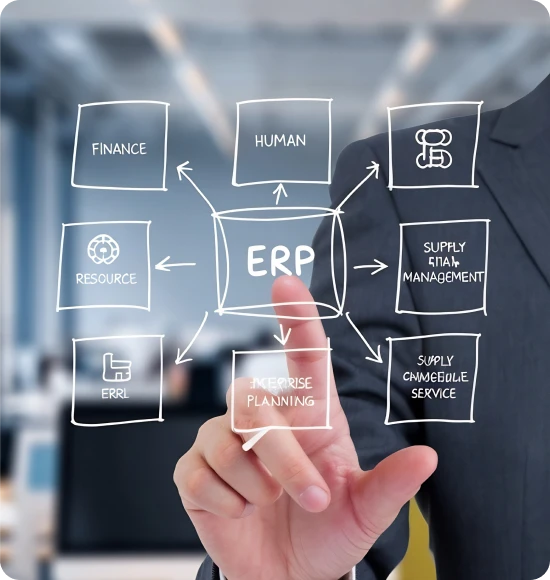
We analyse workflows, business requirements, & system challenges to develop a structured ERP implementation strategy.
Our team configures ERP environments, modules, workflows, & user access structures based on enterprise operational needs.
We customize ERP platforms to support business-specific workflows, reporting structures, & process automation requirements.
Sparkout securely migrates your enterprise data and then connects the ERP systems with your business apps for smooth business operations.
We validate ERP environments, test workflows, resolve deployment issues, & support stable ERP software deployment across the organization.
Post-deployment, we optimize ERP performance, improve system scalability, and offer continuous ERP implementation support.
Modern enterprises require multiple business systems to manage operations, workflows, and enterprise data. Sparkout helps businesses build connected ERP ecosystems through secure ERP integration solutions and scalable deployment solutions that improve operational visibility, workflow coordination, and enterprise scalability.
We connect ERP platforms with enterprise applications to simplify operations & improve data flow across departments.

Our ERP cloud deployment solutions help enterprises build flexible and scalable operational environments.

Sparkout delivers software modernization services that connects modern ERP platforms with existing enterprise infrastructure.

Enterprise resource planning implementation involves multiple stages and that includes system integration, data migration, workflow setup, and enterprise-wide deployment. Without the right ERP implementation strategy, businesses may face technical and operational challenges that often require software project rescue and deployment restructuring.
Sparkout helps enterprises simplify these complexities through structured planning, scalable deployment, and connected business workflows.
Legacy data migration can bring in errors, duplicate records, & reporting issues.
Impact: Data inconsistency • Reporting delays • Clean-up efforts
Older business systems may not integrate easily with modern ERP platforms.
Impact: Integration delays • Workflow gaps • Operational silos
Teams may find it hard to adapt to new ERP workflows without proper training and support.
Impact: Low adoption • Productivity slowdown • Workflow resistance
Poor ERP deployment planning can affect daily business operations during rollout.
Impact: Operational disruption • Delays • Business continuity risks
ERP systems must match with real business processes to avoid operational inefficiencies.
Impact: Process delays • Workflow confusion • Reduced efficiency
ERP environments should support future business growth and operational expansion.
Impact: Performance issues • Infrastructure limits • Growth challenges
Different industries have unique operational needs, compliance requirements, and workflow structures. Sparkout delivers industry-specific ERP software implementation services that align with sector challenges, regulatory standards, and business processes across enterprise operations.
We help manufacturers better optimize production planning, inventory tracking, & supply chain operations via connected ERP environments.

Our ERP solutions support retail businesses with inventory synchronization, order management, & omnichannel operations.

Sparkout implements ERP systems that improve patient management, resource allocation, & healthcare compliance tracking.

We deploy secure ERP platforms that manage transactions, regulatory compliance, & financial reporting workflows.

Our ERP implementation services optimize warehouse operations, fleet management, & distribution workflows.

We help service enterprises manage projects, resource allocation, and client engagement through unified ERP platforms.

Sparkout's ERP software implementation services help businesses centralize workflows, optimize enterprise operations, and improve operational efficiency through scalable ERP ecosystems. The business benefits of choosing our ERP software implementation services include:
Sparkout unifies operational workflows to help businesses track processes, monitor performance, & manage operations better.
We connect enterprise departments through centralized ERP workflows that improve coordination across operations.
Our ERP solutions help businesses improve reporting speed and planning accuracy across business operations.
Sparkout deploys ERP automation tools that reduce manual effort and thereby improves operational efficiency.
We build scalable ERP environments that support business expansion and evolving operational needs.
Our ERP systems help enterprises maintain consistent workflows across departments and business operations.
We deliver AI-powered business solutions that improve operational visibility and strategic decision-making.
Sparkout helps enterprises estimate the cost of ERP software implementation based deployment scope, integrations, customization, and scalability requirements. Our ERP implementation consulting services focus on building scalable ERP ecosystems that better align with your enterprise workflows and business growth plans.
| ERP Implementation Scope | Estimated Cost Range | Estimated Timeline |
|---|---|---|
| Small Business ERP Setup | $15,000 – $40,000 | 2–4 Months |
| Mid-Scale ERP Setup | $40,000 – $120,000 | 4–8 Months |
| Enterprise ERP Ecosystem | $120,000 – $500,000+ | 8–12+ Months |

Partner with Sparkout to plan ERP timelines, deployment scope, and implementation strategy for scalable, efficient business operations.
At Sparkout, we build scalable ERP ecosystems using modern enterprise technologies designed for secure operations, connected workflows, and long-term business scalability. Our ERP software architecture ensures flexible, cloud-ready, AI-enabled, and enterprise-grade business environments.
Enterprises rely on Sparkout for ERP software development service and implementation because of our strong engineering expertise, scalable delivery approach, and experience managing complex enterprise workflows across industries.
 Structured ERP delivery with scalable engineering, workflow clarity, and long-term operational support.
8+ years of experience delivering enterprise software development and ERP implementation solutions.
Our skilled engineers are experienced in enterprise application development and scalable ERP ecosystems.
We have strong understanding of enterprise operations, workflow structures, and connected business systems.
Our structured implementation approach ensures smooth deployment and operational stability.
Sparkout maintains clear collaboration and offers regular updates throughout the ERP implementation process.
We ensure continuous optimization and operational support to help enterprises scale ERP environments confidently.
Sparkout helps enterprises modernize operations through scalable ERP ecosystems built for long-term business growth.
Sparkout supports flexible ERP Hiring models based on enterprise goals, operational complexity, and implementation requirements.
Hire dedicated ERP experts for long-term implementation, optimization, and enterprise support.
Choose structured ERP deployment with defined scope, timelines, & delivery goals by hiring our EPR team.
Hire our ERP consultants to plan deployment, optimize enterprise workflows, & align ERP systems with business goals.
Scale ERP operations by hiring our experts for continuous optimization, integration, and support services.
Sparkout helps you choose the right ERP support model based on your business and deployment needs.
A collection of highly curated blogs on the latest technology and major industry events. Stay up-to-date on topics such as Blockchain, Artificial Intelligence, and much more.
View all blogs