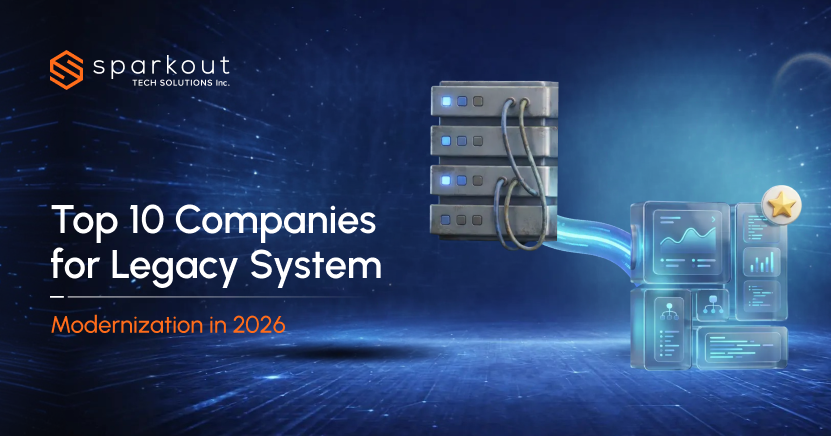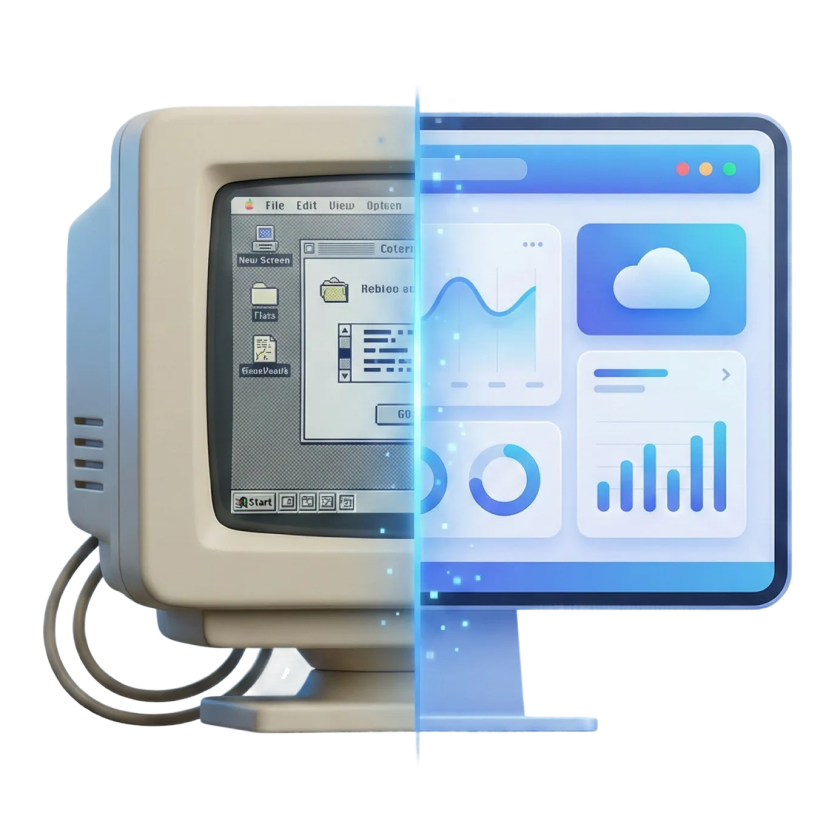



Legacy system modernization is the strategic transformation of age-old or outdated applications, infrastructure, and mainframe legacy systems. It converts them into scalable, secure, cloud-native, and AI-ready platforms that are built for long-term growth and innovation.
Many enterprises still rely on systems that were built decades ago. These platforms were not designed for cloud scale, AI integration, or real-time agility. That's why legacy system modernization has become the core driver of digital transformation and long-term resilience.
Organizations that delay legacy application modernization end up dealing with high security risks, slower innovation, compliance challenges, and increasing maintenance costs. This guide explains what legacy modernization is, how it works, the strategies available, the costs involved, and real-world examples to help you plan effectively.
Key Takeaways - Legacy Modernization in 60 Seconds
- Legacy system modernization updates outdated applications & infrastructure
- It includes cloud migration, re-architecting, refactoring, and replacement
- Modernization minimizes technical debt and improves scalability
- Enterprises use legacy modernization services to support AI and cloud adoption
- Cost varies by complexity, industry, and migration strategy
- Modernization strengthens long-term digital transformation strategy
What is Legacy System Modernization
Legacy system modernization refers to the technical process of upgrading, refactoring, re-platforming, or rebuilding outdated systems to meet modern performance, scalability, compliance, and security standards. With this, the legacy applications will become faster, safer, and easier to evolve as the business grows.
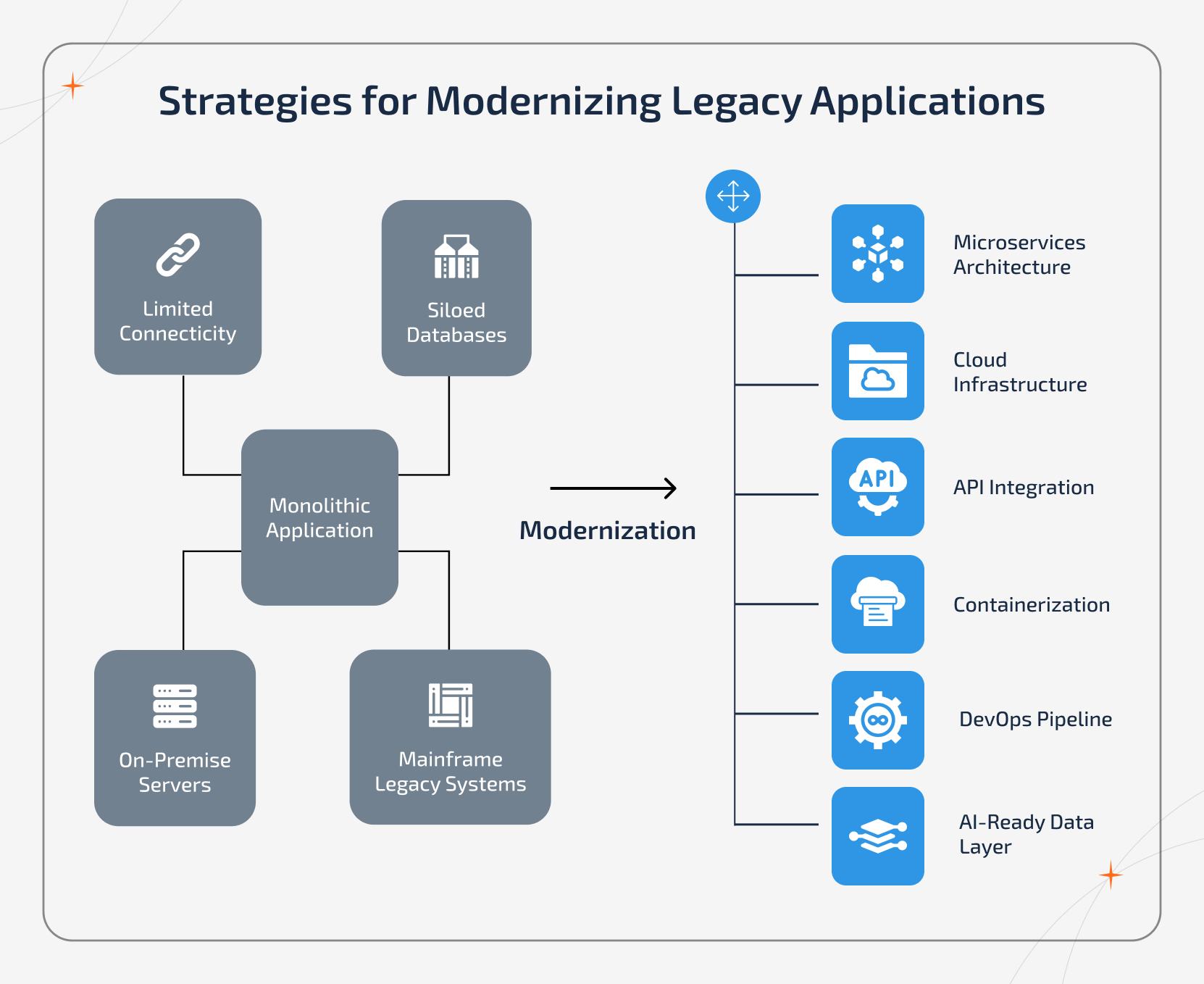
Unlike simple infrastructure upgrades, legacy system transformation involves:
- Legacy application modernization
- Legacy software modernization
- Legacy code modernization
- Enterprise legacy system migration to the cloud
- Mainframe modernization services
- API-driven integration to integrate legacy systems
- Replacing monolithic architectures with microservices
With modernization, legacy applications can operate within cloud-native environments, support DevOps workflows, and align with modern application development practices. Thus, the end goal is not just migration. It is all about the architectural evolution.
Why Legacy System Modernization is a Strategic Imperative
In 2026, legacy system modernization is no longer a technical upgrade, it is foundational for enterprise growth.
For enterprises, it is a strategic business decision that directly impacts:
- Revenue
- Cost efficiency
- Risk management
- Innovation speed and
- Market agility
Modernization helps enterprises to:
- Execute digital transformation strategy
- Improve operational efficiency
- Optimization of infrastructure and maintenance costs
- Strengthen cybersecurity resilience
- Accelerate product and service innovation
So, those organizations that invest in structured legacy modernization services can stay away from long-term technical risk, unlock data intelligence, and position themselves for long-term competitiveness.
Why Businesses Still Rely on Legacy Systems
Even in 2026, we could see many organizations operating on legacy and mainframe systems. While these platforms have certain limitations, businesses still prefer them for the critical business operational support.
1. Stability & Proven Reliability
A lot of legacy systems have found to
be running without interruption for over 20-30 years. This long-term stability is one factor for
enterprises to trust the legacy systems.
2. High Cost of Replacement
Replacing an entire system becomes expensive
and risky. i.e., a full rebuild may affect the business operations, and hence companies often delay
major changes.
3. Deep Integration with Core Operations
Often, legacy systems are
connected to finance, HR, supply chain, and other essential sectors. Hence, companies think that
changing the existing system can affect the entire organization.
4. Compliance and Industry Requirements
Often, industries like banking
and healthcare still rely on legacy software modernization approaches instead of
complete rebuilds to maintain regulatory compliance.
Know the Challenges of Keeping Legacy Systems
Although legacy systems offer stability, they also include challenges, such as:
- Increased cybersecurity risks
- Higher maintenance & infrastructure costs
- Vendor lock-in
- Limited scalability and
- Slower innovation & delayed product updates
Signs It's Time to Modernize Your Legacy Infrastructure
Business and enterprise leaders should consider modernization when legacy systems starts to limit the current business process. Some of the most common warning signs include:
1. Higher Maintenance Costs Than Innovation Spending
The maximum of the
IT budget goes toward fixing and maintaining old systems instead of building new capabilities. This
implies the need for modernization.
2. Frequent Downtime Affects Revenue
System failures or slow performance
starts to appear and thus impacts customer experience and business operations.
3. Growing Security Vulnerabilities
Outdated software becomes more
vulnerable to modern cyber threats and security risks. This is when organizations should think of
modernizing legacy systems.
4. Difficulty Integrating with Modern SaaS Tools
Connecting legacy
systems with modern systems like cloud applications, APIs, or third-party platforms becomes complex
and expensive.
5. AI and Analytics Initiatives are Stalled
Old systems lack the data
structure and flexibility that are required to support automation, predictive analytics, or
AI-driven insights.
When these issues start appearing, then it's time for transforming to legacy modernization. In the ever-evolving tech world, it becomes a strategic necessity for sustaining growth, improving efficiency, and staying competitive.
The Importance of Shifting from Legacy Systems to Modernization Platforms
Staying ahead in the modern business environment is vital, and thus organizations need to focus on speed, flexibility, and the ability to adapt quickly. With legacy systems, achieving all these becomes difficult. They, in turn, limit cloud adoption, slow down innovation, and create barriers when it comes to using AI and advanced analytics.
Why Modernization Matters:
To witness the growth and innovation, organizations need the following:
- Cloud infrastructure - To scale up or down the resources when the business needs a change.
- API interoperability - Useful for systems to connect and share data easily.
- AI-ready data architecture - Used to enable automation, machine learning, and predictive insights.
- DevOps pipeline - Offers updates faster and improves software quality.
- Cyber-resilience - Protect against modern security threats.
Thus, without legacy platform modernization, companies will often find it difficult to implement automation, predictive analytics, real-time reporting, and AI-driven decision-making.
While legacy systems keep operations running, modern systems help businesses innovate, grow, and compete in the digital-first world.
Legacy Systems to Modernization - The Real Conversion Process
Transforming a legacy system into a modernization platform is not a single step change. It is a structured process that helps businesses reduce risk while improving performance and scalability. The following phases are a part of a typical legacy modernization process:
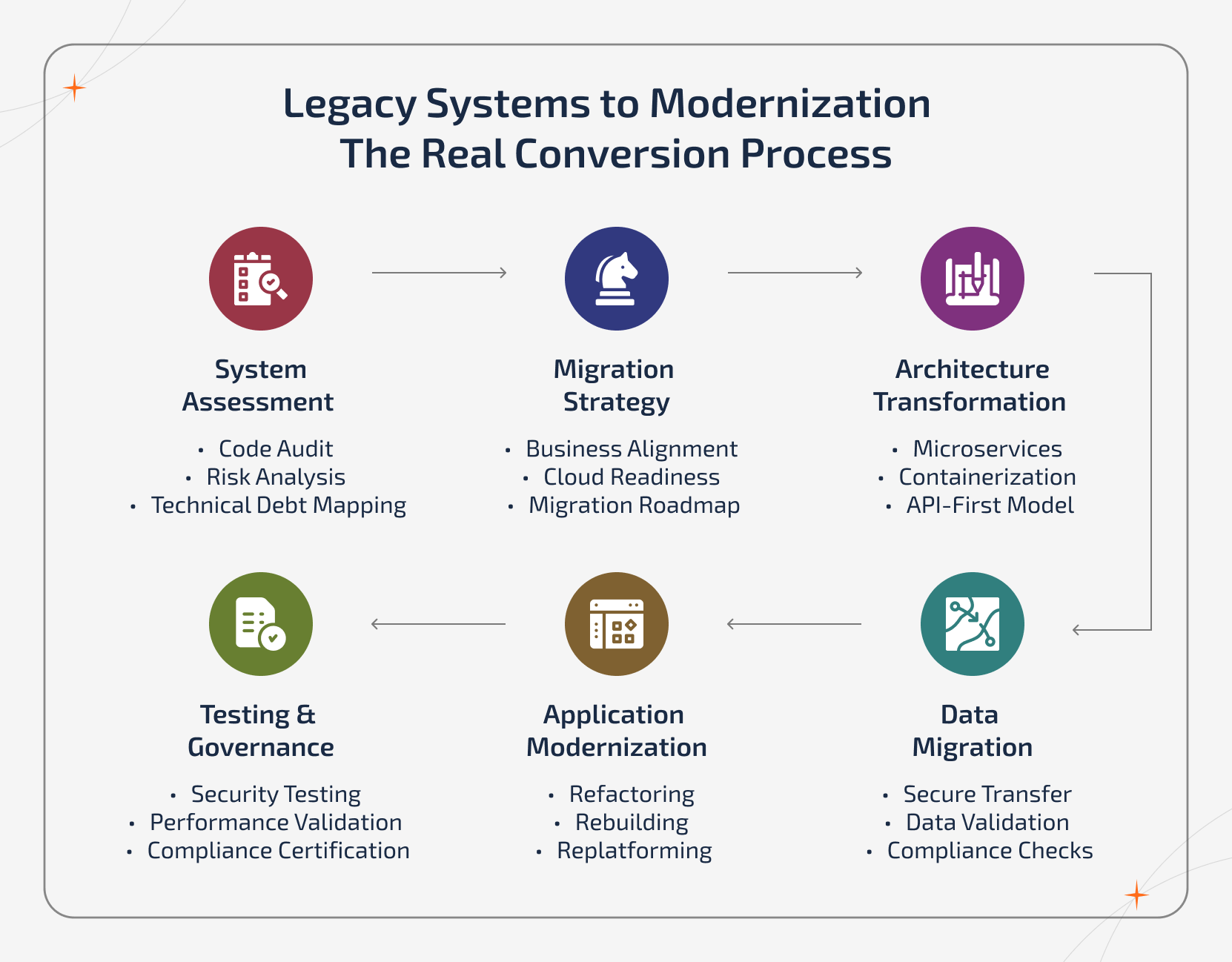
Step 1: Assessment & Audit
The very first step is to understand what your business currently has. This includes
- Analyzing existing code
- Reviewing the technical gap
- Checking infrastructure status
- Identifying security and compliance risks
During this phase, businesses can determine what to keep, improve, replace, or retire.
Step 2: Strategy Planning
During this step, organizations will define a clear modernization roadmap. Now, the legacy system migration should align well with the business goals. This is the step that decides whether to focus on faster adoption, cloud adoption, cost reduction, or AI readiness.
With this step, leaders can decide whether to rehost, refactor, re-platform, or rebuild the system completely from scratch.
Step 3: Architecture Redesign
A lot of legacy systems are built to be monolithic applications, where all parts of the system are connected and run as one large program. So, when one parts needs to be updated or fixed, it often affects the entire system.
Modernization helps redesign this structure into modular architectures like microservices or cloud-native models. With this, each component works independently. So, scaling, updating, and innovating become easy without disrupting the existing operations.
Step 4: Data Migration
Data plays a major role in the modernization process. It is this step that ensures databases are securely moved to modern environments such as cloud platforms without data loss or downtime.
Thus, security, integration, and compliance are taken into account during this phase. With a smooth integration, businesses can continue working while improving speed and scalability.
Step 5: Application Transformation
When the foundation is all set, the application modernization process begins. i.e., this involves refining old code, rebuilding outdated modules, integrating APIs, and enabling automation or AI features.
The goal of this step is to create applications that work faster, are more flexible, and are ready to support future business growth.
Step 6: Testing & Optimization
Just before launching the modernized legacy system, it is thoroughly tested for performance, security, integration, and scalability.
Once after the deployment, the system is continuously monitored for further optimization when the business needs evolve.
Business Benefits of Legacy System Modernization
With the competitive marketplace, organizations that invest in legacy modernization solutions are capable of gaining clear and measurable business benefits. This includes:
1. Improved Scalability
Those modern, cloud-based systems can scale up or
down based on the demand that occurs. So, businesses can efficiently handle any traffic, expansion,
or new market shift without needing to rebuild the infrastructure.
2. Enhanced Security
Modern platforms rely on advanced encryption,
continuous monitoring, and updated compliance tools. This helps businesses stay away from
cyberattacks and data breaches.
3. Lower Operational Costs
By moving to modernization platforms,
businesses can reduce hardware, maintenance, and support costs that come with expensive legacy
systems. Besides, cloud environments also optimize resource usage and reduce overall IT spending.
4. AI & Automation Support
Modern systems are designed to support AI
tools, automation workflows, and data analytics. This helps businesses automate processes, improve
decision-making, and increase operational efficiency.
5. Faster Innovation
With CI/CD pipelines and DevOps practices, teams can
release updates and new features faster than ever. This eventually shortens the development cycles
and helps businesses respond faster to market changes.
6. Better User Experience
Modern UI/UX design helps
improve business performance, usability, and accessibility. This leads to higher employee
productivity and better customer engagement.
Popular Legacy System Modernization Strategies - Explained
Choosing the right legacy modernization approach depends on the system complexity, risk tolerance, budget, and long-term business goals. Often, not every organization needs a complete rebuild. Sometimes, adding gradual improvement is enough to optimize business workflows.
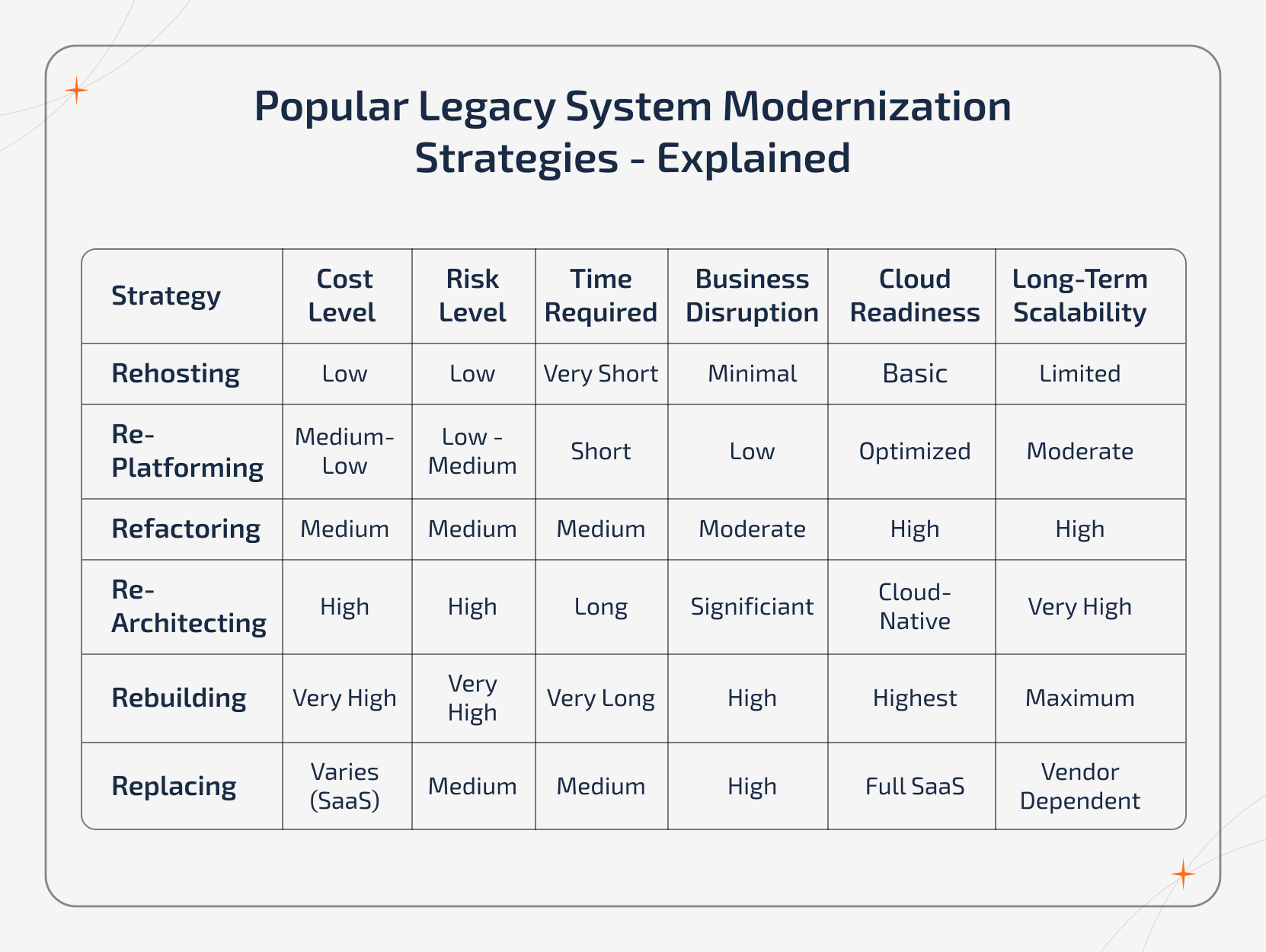
1. Rehosting (Lift-and-Shift)
As the name suggests, this approach is all
about moving the existing system to the cloud without making major changes to the code. It is the
fastest and least disruptive option. It is used to reduce infrastructure costs and improve
reliability.
2. Replatforming
In this approach, the entire system is moved to the
cloud with little or minimal optimization. Besides, minor improvements are made to enhance the
performance, scalability, or compatibility without fully redesigning the application.
3. Refactoring
This involves restructuring and improving the existing
code to improve performance, scalability, and maintainability. In other words, the core
functionality remains the same. However, the system becomes more efficient and easier to manage.
4. Re-Architecting
This strategy is all about redesigning the system's
structure, often shifting from a monolithic model to microservices or a cloud-native architecture.
With re-architecting, it is possible to improve flexibility, scalability, and long-term innovation.
5. Rebuilding
In this approach, the system is rebuilt from scratch using
modern development frameworks and technologies. Thus, it allows businesses to fully redesign
workflows and create a future-ready solution.
6. Replacing
This approach is for those businesses that don't require
modernization of the existing system. Here, the organization adopts SaaS or third-party software
solutions. This can be cost-effective and fast, but may require adjusting business processes to fit
the new platform.
Thus, each and every strategy offers a different balance between cost, risk, speed, and long-term benefits. The key is choosing the approach that aligns with your business priorities and growth plans.
Legacy System Modernization vs. Replacement - A Strategic Comparison
When it comes to updating outdated systems, organizations most often end up choosing either to modernize the existing platform or completely replace it. Each approach involves different levels of business impact, costs, and risks.
| Modernization | Replacement |
|---|---|
| Lower operational risk | Higher business disruption |
| Gradual, phased transition | Full system overhaul |
| Preserves existing business logic | Often requires process changes and retraining |
| More controlled and predictable costs | Higher upfront investment |
| Faster time to value | Longer implementation timeline |
What Enterprises Prefer
In most cases, enterprises will choose modernization first as it provides clear business benefits with reduced operational risks. It allows them to improve performance, security, and scalability while maintaining business continuity.
A full replacement is typically considered when the existing system is too outdated to improve or it no longer aligns with long-term business goals.
Ultimately, the right choice depends on system condition, budget, risk tolerance, and future growth plans.
Cloud vs On-Premise Legacy Modernization Approach
When modernizing legacy systems, businesses prefer to choose between moving to the cloud, staying on-premises, or adopting a hybrid approach.
1. Cloud Modernization
Cloud modernization works best for those organizations that are mainly focusing on growth, innovation, and flexibility. Modernizing legacy applications in the cloud comes with several advantages:
- Elastic Scalability - Resources can effortlessly scale up or down based on varying business needs.
- Lower Infrastructure costs - There is no need to maintain expensive physical servers.
- AI and Analytics Readiness - Cloud platforms offer automation, AI tools, and advanced data processing.
- Faster Deployment - It is possible to quickly roll out updates and new features.
2. On-Premise Modernization
In some industries, it absolutely necessary to keep the systems on-premise.
Sectors like banking, healthcare, and government may have strict regulatory standards, data residency, or security requirements. In such cases, modernization happens within internal infrastructure while upgrading performance and security.
3. Hybrid Approach
Many enterprises now prefer to choose a hybrid model. Thus, those critical or sensitive workloads remain on-premise, while scalable or customer-facing applications get moved to the cloud.
This approach is highly preferred as it balances compliance, control, and flexibility.
Legacy Code Modernization - Refactor, Rewrite, or Retire?
Not all the legacy system needs to be rebuilt from scratch. In a lot of cases, businesses can take a targeted approach to improve performance while reducing costs and risk. The right decision depends on the system's technical condition, business value, and the ability to support current and future needs.
1. Refactor
Refactor or refactoring focuses on restructuring the existing code without changing the core functionality. The goal is to make the code cleaner, faster, and easier to maintain. It improves performance and stability while extending the life of the application.
2. Rewrite
Rewriting involves rebuilding certain or specific components from scratch when they are outdated or complex to fix up. This approach is highly useful when specific models limit scalability, integration, and overall performance.
3. Retire
When certain applications or features no longer provide business value, they can be retired. Retiring them often reduces complexity, lowers maintenance costs, and decreases security exposure.
Effective legacy application transformation involves making smart and practical decisions. It means improving the parts of the system that still add value, rebuilding the components that slow down growth, and removing anything that is no longer aligned with business goals.
Rather than making sudden and risky changes, this approach focuses on gradual improvement. It minimizes the operational risk, keeps costs under control, and builds a stronger foundation for future innovation, scalability, and long-term business success.
What Does Legacy System Modernization Actually Cost?
The cost of legacy system modernization differs based on varied factors. It includes the size of the system, technical complexity, compliance requirements, and the level of transformation needed.
Key Cost Factors:
Modernization expenses are influenced by:
- System complexity - More effort is required to upgrade those older and tightly integrated systems.
- Industry regulations - Highly regulated sectors requires additional security and compliance measures.
- Infrastructure changes - Often, moving to the cloud or redesigning architecture increases the scope.
- Volume of data - Large-scale data migration needs careful planning and validation.
- Required integrations - Connecting with modern SaaS tools, API, or third-party platforms adds complexity.
Typical Enterprise Cost Estimates
While the exact numbers vary, general industry ranges are as follows:
- Mid-size application modernization: $150,000 - $500,000
- Large enterprise modernization: $500,000 - $2M+
- Mainframe modernization services: Often in the multi-million-dollar range
The cost ranges mentioned above heavily depend on the project scope and modernization strategy.
Is it Worth the Investment?
While modernization requires an upfront cost, most organizations recovers that investment over time. They save money through:
- Lower maintenance costs
- Reduced infrastructure expenses
- Better operational efficiency
- Faster product releases and innovation
In many cases, the long-term benefits and savings are higher than the initial cost spent for the modernization of legacy systems.
How Different Industries Benefit from Legacy Modernization
Legacy system modernization impacts every industry differently. The exact benefits depend on the regulatory needs, operational complexity, and digital transformation goals.
1. Banking
Banking sectors use legacy system modernization to improve
regulatory compliance, strengthen data security, and increase transaction scalability. It also
enables real-time transactions, supports digital banking services, and enhances fraud detection.
2. Healthcare
With modernization, healthcare sectors can improve patient
data security, ensure compliance with healthcare regulations, and improve system reliability.
Besides, it supports electronic health records (EHR), telemedicine, and data-driven care.
3. Retail
Cloud-based modernization helps retailers effortlessly manage
real-time inventory, optimize supply chains, and use AI for demand forecasting and offer
personalized customer experiences.
4. Manufacturing
Modern legacy systems can improve
IoT integration, enable predictive maintenance, and provide real-time production monitoring. This
increases operational efficiency and reduces downtime in the manufacturing units.
Risks Involved in Not Modernizing Legacy Systems
Taking a longer time to decide on modernizing the legacy system will bring in long-term challenges for the organizations. What may not seem like cost savings in the short term will lead to bigger risks over time. The most common risks include:
1. Increased Cybersecurity Exposure
Securing the outdated systems becomes
hard, and it becomes more vulnerable to modern cyberattacks. Since older systems will not receive
security updates for longer, there is an increased risk of data breaches.
2. Compliance Violations
When the regulations keeps evolving, legacy
systems will find it hard to meet those new compliance standards. As a result, organizations will
have to deal with legal penalties, audit failures, and reputational damage.
3. Higher Operational Costs
Maintaining outdated systems requires
additional support, frequent fixes, and expensive hardware. So, the maintenance costs can exceed the
cost of modernization over time.
4. Innovation Stagnation
Legacy platforms often limit themselves from
integrating with the modern tools, AI solutions, and cloud services. This eventually slows down the
product development and digital transformation efforts.
5. Competitive Disadvantage
Organizations that
don't modernize will eventually fall behind the competitors who work faster on more flexible
systems. This, in turn, affects the customer experience, overall growth, and speed-to-market.
How AI Speeds Up Legacy System Transformation
Artificial Intelligence is playing a major role in accelerating legacy system modernization. AI-powered tools help reduce manual effort, improve accuracy, and shorten the project timelines. Modern AI solutions assist with:
- Automated code analysis
- Intelligent refactoring
- Test automation
- Data migration optimization
Upon optimizing the complex and repetitive tasks, AI-driven modernization helps reduce the project time, lowers operational costs, and minimizes human errors.
Choosing the Right Legacy System Modernization Services Partner
Choosing the right legacy system modernization services company is vital for the success of your transformation initiative. Legacy modernization is complex and often requires deep technical expertise, industry understanding, and structured governance. You can consider the following points when evaluating legacy system modernization companies:
- Industry experience - Capable of understanding regulatory requirements and domain-specific challenges.
- Cloud Expertise - Proven experience in cloud migration, architecture redesign, and scalable infrastructure.
- Security Certifications - Strong data protection practices and compliance standards.
- Proven Migration Frameworks - Should be capable of following a structured approach that minimizes downtime and risk.
- Post-Modernization Support - Capable of offering continuous optimization, monitoring, and long-term support.
Amongst the available companies for legacy system modernization, choosing the right partner ensures long-term value in addition to a technical upgrade. At Sparkout, we follow a structured, risk-controlled modernization framework that is designed specifically for enterprises. Our team of experts combines cloud-native architecture expertise, security-first engineering, and scalable development practices to ensure smooth transformation with minimal disruption.
Understanding the Legacy System Modernization Timeline
The exact timeline for legacy system modernization depends on the system size, complexity, and business needs. Since every project is different, it is vital to follow a structured progression.
Typical Timeline Breakdown:
| Phase | Typical Duration | What Happens in This Phase |
|---|---|---|
| Assessment | 2-6 weeks | Assessment |
| Strategy Planning | 4-8 weeks | Create modernization roadmap, choose approach, define architecture, align with business goals |
| Migration & Development | 4-9 months | Execute cloud migration, refactor or rebuild applications, migrate data, & implement integrations |
| Testing & Optimization | 1-3 months | Validate performance, security, scalability, & fine-tune the system after deployment |
Expert Insights: Note that the large enterprise legacy system migration to cloud projects may extend beyond 12 months. This happens when the systems are highly integrated, regulated, or require phased rollouts to avoid operational disruption.
Real-World Legacy Modernization Examples
Organizations that adopt structured legacy modernization solutions see measurable business improvements. Common outcomes reported include:
- A survey of legacy system modernization approach reports shows, 30-50% reduction in operational costs. This includes lower infrastructure spending, reduced maintenance, and optimized resource usage.
- Up to 40% performance improvement as per Bayone case study. This includes faster processing speeds, improved system reliability, and reduced downtime.
- Improved customer satisfaction with better system responsiveness, enhanced digital experiences, and fewer service disruptions.
- Faster release cycles. DevOps and modern architecture enable quicker updates and faster time-to-market.
These real-world legacy modernization examples indicate that modernization is not just about replacing old systems. Instead, it delivers measurable ROI through cost savings, operational efficiency, and stronger customer engagement.
Conclusion
In 2026, legacy system modernization is becoming a business necessity. Thus, organizations that continue to rely on outdated systems has the higher risk of falling behind the digitally processing competitor. Modernization forms the foundation for:
- Successful digital transformation
- AI and data-driven decision-making
- Cloud scalability and flexibility
- Improved operational efficiency
- Long-term resilience and adaptability
Companies that follow a proactive approach of modernization seems to position themselves to innovate, respond quickly to market changes, and reduce risk.
Ready to move beyond legacy limitations?
Partner with Sparkout to transform legacy systems into secure, scalable, cloud-native platforms built for future growth