


The moment a customer hits the "Pay Now" button on your website, the next few seconds will determine whether to make or break the purchase. This is where the payment gateway integration in website makes its appearance. It ensures that every transaction has been carried out smoothly and securely without any hiccups across devices and payment methods.
Besides completing the payments efficiently, a properly integrated ecommerce website payment system also creates trust, minimizes checkout friction, and supports business growth. By collaborating with payment gateway integration services, your websites can have multiple payment options while keeping the customer's sensitive data safe and secure. This creates a seamless experience and makes the customers proceed with more payments.
This blog gives a deeper insight into payment gateway integration in website, exploring its different types and the algorithm to set it up seamlessly on your website.
What is Payment Gateway Integration?
Payment gateway integration is a structured process of connecting a website or application with a secure online payment system to smoothen the online transactions. This acts as a bridge between the customer's payment method, including credit cards or digital wallets, making sure the funds are transferred safely and efficiently.
Beyond generic payments, a well-executed integration handles authentication, encryption, and real-time transactions, which makes the online transfers seamless for users, maintaining compliance with financial regulations. At its core, it transforms web and mobile app development and transaction workflows into a secure platform, which is capable of accepting and managing digital payments with confidence.
How Does Payment Gateway Integration in Website Actually Work?
The working of the payment gateway integration in website begins when a customer submits the payment details on any website's checkout page. After this, it captures the sensitive information securely, encrypts the data and transmits it to the payment processor. This step makes sure that sensitive payment info is protected while the transaction request moves through the payment network.
As a next step, the payment processor communicates with the customer's bank network to verify the payment details. Now, based on the bank's response, the transaction will be either approved or declined.
If the transaction is approved, the payment is completed, and the funds are scheduled for settlement in the corresponding user's account. This ensures a smooth and reliable transaction flow.
Integrated Gateway vs Custom Gateway Development: What's Best?
When businesses plan to accept online payments, they often have a common question in their minds: which is, should I integrate an existing payment gateway or build a custom one?
In major companies, integrating a trusted payment gateway is the fastest and most reliable one. It allows businesses to start accepting payments securely and quickly without worrying about security concerns. If you need a quick comparison, then go through the table below.
| Factor | Payment Gateway Integration | Custom Gateway Integration |
|---|---|---|
| Time to Launch | Few days to a few weeks | Several months |
| Budget | The setup cost is minimal with transaction fees | High development and infrastructure cost |
| Compliance | It is mostly handled by the provider | Thoroughly managed by the business |
| Customization | Customization is limited based on provider features | Complete control over payment workflows |
| Maintenance | Managed by the gateway provider | Businesses must handle the updates and security |
In most cases, startups and evolving businesses prefer payment integration in websites because it's safer and easier to manage. On the other hand, custom development is suitable for organizations that mostly require control over their payment system.
Different Types of Online Payment Gateway
Online payment gateways will vary based on how the transactions are handled and where the payment data is processed. Understanding these key types will help businesses choose a standard gateway that aligns with the operational needs, security requirements, and customer expectations.
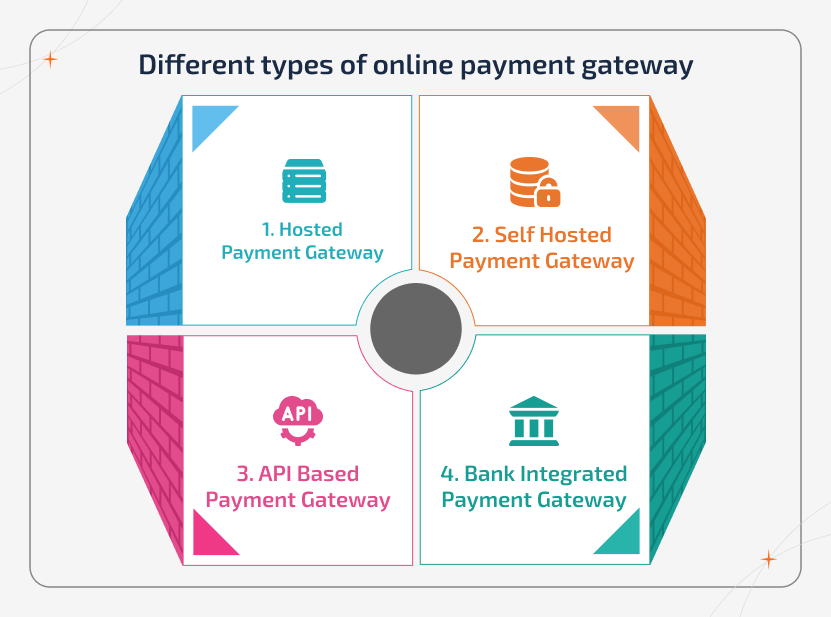
Hosted Payment Gateway
The hosted payment gateway redirects customers from the business website to the payment service provider's secure payment page to complete the transaction. Here, all the sensitive payment information has been collected and processed on the provider's platform. This reduces the business's exposure to cybersecurity risks and compliance responsibilities.
Best Suited For:
- Startup companies that are searching for a quick and hassle-free deployment.
- Small to mid-sized businesses.
- Businesses with limited PCI DSS compliance readiness.
Key Strengths:
- Faster implementation with minimal technical effort.
- Lower compliance and maintenance headaches.
- Robust security measures with proactive fraud prevention are overseen by the provider.
Self-Hosted Payment Gateway
Unlike the previous one, here customer enter their payment details directly on the business website. Here, the transaction data is securely transmitted to the gateway server for authorization and processing. With this unique approach, businesses can maintain greater control over the checkout design and user journey without the headache of managing the entire payment infrastructure.
Best Suited For:
- Growing businesses that are aiming to enhance their brand presence.
- Industries that seek a balance between control and security.
Key Strengths:
- Tailored checkout experience.
- Improvised brand consistency throughout the payment flow.
- A moderate control over data handling and processing.
API-Based Payment Gateway
API-based payment gateways integrate directly into the website or application. Without redirecting users, this enables payments to be processed entirely within the platform. This level of deep integration supports complex online payment gateway integration workflows, seamless user experiences, and advanced transaction management features.
Best Suited For:
- Businesses with custom products or subscription models.
- Enterprises and high-traffic platforms.
- Firms that rely on third-party integration services to connect their payment gateway with external platforms.
Key Strengths:
- Supports advanced features like saved cards and recurring payments.
- High scalability and flexibility for future growth.
- End-to-end control over the payment workflows.
Bank-Integrated Payment Gateway
Bank-integrated payment gateways link directly with the bank's payment processing system. It allows transactions to be settled and authorized within the banking network. These specific gateways are often chosen for their reliability, regulatory alignment, and direct settlement capabilities.
Best Suited For:
- Regulated industries require strict financial oversight.
- Enterprises with high transaction volumes.
Key Strengths:
- Direct settlement with the banking institutions.
- Robust transaction stability and uptime.
- Enhanced compliance and regulatory confidence.
Payment Gateway Integration Use Cases Across Industries
Payment gateway integration supports different business models across industries by enabling secure and flexible payment processing.
🛒 E-commerce Platforms
Online payment integration stores like Amazon, eBay, and Walmart use payment gateways to accept digital wallets, card payments, and international transactions directly through their checkout pages.
🎬 Subscription-Based Services
SaaS platforms and membership-based services mostly rely on gateways to manage recurring billing, automatic renewals, and subscription payments.
💳 Online Marketplaces
Multi-vendor platforms use payment gateways to handle transactions between sellers and buyers while managing commissions and payouts.
🧳 Travel & Booking
Most of the airlines, hotels, and ticketing platforms use gateways to process reservations, deposits, and instant payments securely.
🏪 Retail
Retailers who sell through websites, mobile applications, and POS systems use integrated gateways to maintain a consistent payment processing across channels.
What to Look for in a Payment Gateway Before Integration
Predictive analytics relies on a certain range of analytical models to generate accurate forecasts and insights. Each model is specifically designed to address data patterns and decision needSelecting the best payment gateway is not just about making a technical decision. It's more like a core thing that directly impacts the user trust, checkout experience, and revenue flow. By going through the aspects below, businesses can select a gateway that fits their current needs and future growths.
Checkout Experience & User Flow
A reliable payment gateway should support a smooth and distraction-free checkout process. Less redirections, quicker loading times, and transparent payment steps will minimize drop-offs and boost completion rates.
Payment Reach & Flexibility
The payment gateway should align with how your customers like to pay. Encourage diverse payment modes, currencies, and regional options, ensuring wider acceptance and better market reach.
Data Protection & Risk Management
Look for payment gateways that can actively manage fraud, encrypt sensitive information, and support secure authentication methods. A robust risk control prevents transaction failure and unauthorized access.
Cost Efficiency
Instead of focusing on transaction fees, do assess long-term cost efficiency. Key factors like refund management, chargeback handling, and operational overhead will affect the overall profitability.
Technical Adaptability
Flexible gateway allows quick integration with your online website's architecture and other business systems. Clean customizations options, APIs, and future-ready features make the long-term maintenance much easier.
Growth Readiness & support Quality
The payment gateway must scale with increasing transaction volumes and evolving business models. The responsive technical support and a reliable performance are crucial during the peak usage and expansion phases.
Payment Gateway Compliance Checklist
Before you integrate a payment gateway into your website, it's important to ensure a few security and compliance requirements are covered. This helps in protecting the customer's payment data and keeps your business aligned with industry regulations.
✅ Verify PCI DSS Compliance - Make sure the card payment security requirements are met.
✅ Use SSL/TLS Encryption - Your website must always run on HTTPS, so the payment details are encrypted while being transmitted.
✅ Enable 3D Security Verification - Introducing an extra authentication layer, like OTP or any confirmation protocols, helps reduce fraudulent transactions.
✅ Support SCA (Strong Security Authentication) - In certain regions, payments require 2-step verification to ensure that the customer is authorizing the transaction.
✅ Follow GDPR Guidelines - If your website processes payments from EU customers, you need to handle their personal data responsibly and transparently.
✅ Choose Providers With SOC 2 Certification - Prefer payment gateway vendors that follow strict standards for security, privacy, and availability.
✅ Look for ISO 27001 Certified Vendors - This ensures that the provider follows internationally recognized information security management practices.
✅ Be Aware of Regional Regulations - Consider region-specific rules like PSD2 in the EU, PCI-focused standards in the USm and RBI regulations in India.
How to Integrate a Payment Gateway Into a Website
Integrating a payment gateway into a specific website requires a structured approach. It must ensure secure transactions, a reliable user experience, and compliance with industry standards. Let's get on with it.
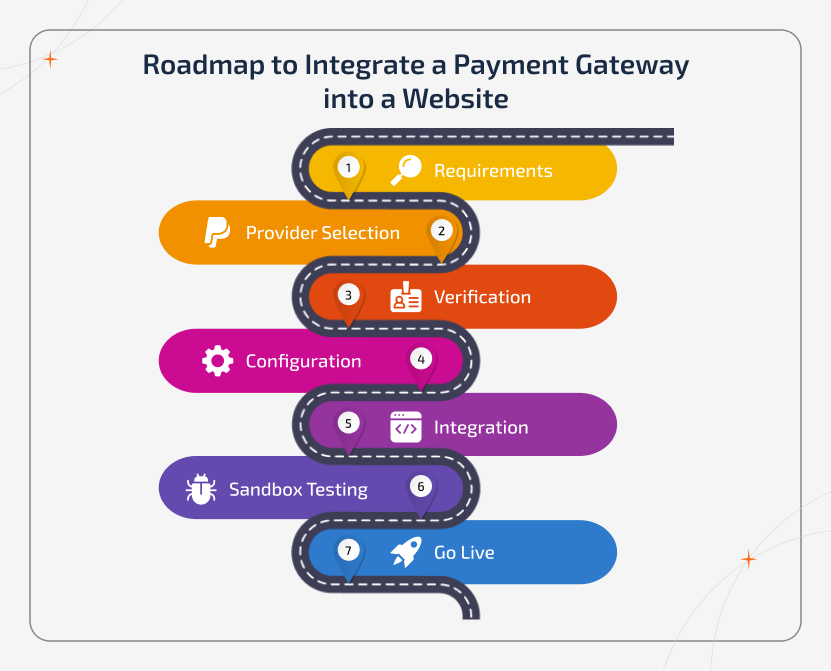
Step 1: Identify Business Requirements
Define your payment needs based on the target customers, supported payment methods, transaction volume, and compliance requirements. This helps in selecting a gateway that aligns with both technical and business goals.
Step 2: Select the Right Gateway Provider
Choose a payment gateway that supports flexible payment options that you're expecting. Also, the one that you're about to choose must offer strong security features and must integrate well with your website's technology stack.
Step 3: Complete Verification
Further, register with the chosen payment gateway provider and complete the necessary verification process. This typically includes filling up the bank details, business documentation, and compliance approvals.
Step 4: Configure Payment Gateway
After this, from the provider's dashboard, set up the payment preferences, currencies, settlement rules, and security configurations. This proves that the gateway is aligned with your regional and operational requirements.
Step 5: Integrate the Gateway
Integrate the payment gateway into your specific website. Use SDKs or APIs and follow the provider's technical documentation to make sure accurate implementation and seamless checkout flow.
Step 6: Test in Sandbox Environment
Conduct rigorous testing using a sandbox or test credentials to ensure the payment flows, error handling, and transaction confirmations. This kind of testing helps to identify and eradicate issues before going live.
Step 7: Go Live & Monitor Performance
Once the testing is successful, switch to live mode and start processing real transactions. Continuously monitor the payment performance, transaction success rates, and security alerts to ensure long-term reliability.

During and After the Integration Secure API credentials → Configure webhooks for payment updates → Use idempotency keys to prevent duplicate charges → Handle errors like timeouts → Complete UAT testing → Verify SSL, DNS, and logging → Monitor transactions after launch.
Real-World Examples of Payment Gateway Integration
To understand the process even better, here are some simple real-world examples of how businesses integrate payment gateways.
Example 1: Redirect Checkout with PayPal
In a redirect-based integration, random customers click the 'Pay Now' button on the website, and it redirects to PayPal's secure payment page. After logging in, they enter the card details and complete the payment to initiate the transaction. Once the payment is verified, the user is redirected back to the website with a 'success' or 'failure' status.
Example 2: API-Based Integration with Stripe
Using the API-based integration, the payment form is built directly on the website. After the customer submits the payment details, the website's server sends the request to Stripe's API. The platform further verifies the payment with the customer's bank and returns the response to the website. This updates the payment status instantly on the checkout page.
In both cases, the data flow looks like: Checkout page → Payment request → Gateway processing → Bank authorization → Payment confirmation
Business Benefits of Integrating a Payment Gateway Into a Website
A well-integrated payment gateway delivers a wide range of benefits for businesses, which smoothens the checkout process, enhances the overall business credibility, and brings better visibility to any app development company.
Scaling Business
An ecommerce website with payment gateway is built in a way to handle the increasing transaction volumes without any performance issues. If your business evolves, the system scales accordingly to support high traffic.
Real-Time Payment Tracking
Integrated gateways always provide real-time transaction status and reporting. This transparency helps businesses to track payments instantly and to maintain accurate financial records.
Improved Brand Credibility
A reliable payment experience reassures its users that the website is secure and trustworthy. This level of confidence strengthens the brand's credibility and boosts customers to repeat the purchase.
Payment Integration Best Practices for Maximum Efficiency
Implementing a payment gateway integration in website isn't actually a straightforward process. The complexity lies in creating a seamless, trustworthy, and user-friendly experience. Businesses can follow the best practices mentioned below to make the integration even smoother and more effective.
Mobile-Friendly Checkout
Make sure that your payment forms and pages are completely responsive. This is because most of the users now proceed with online payment via mobile devices. So, a mobile-friendly checkout boosts conversions and minimizes drop-offs.
Less Form Fields
Make the integration in a way that asks only essential information. Long or complicated forms will frustrate users and enhance cart abandonment, so keep it simple and intuitive.
Multiple Payment Options
Offer various payment methods, including credit/debit cards, UPI, digital wallets, and net banking. Diverse choices means higher chances of successful payments.
Quick Loading Times
Optimize the payment pages for speed, because slow loading will frustrate users, especially for mobile networks, leading to transaction abandonment.
Guest Checkout Options
Not every user likes to create a separate account to initiate the payment. Allowing guest checkout will simplify the process and minimizes the barriers to completing the payment.
Transparent Charges
Display the taxes, service charges, or any other additional fees clearly. This is because hidden costs will always lead to cart abandonment and lower customer trust.

If your business accepts payments through mobile apps or in-store POS systems, it's important to maintain a consistent payment experience across all platforms. A unified setup helps maintain the customer records synced, simplifies refunds, and maintains the same payment status across mobile, web, and in-store transactions. This makes the payment management much easier for businesses.
Security & Compliance Essentials for Payment Gateway Integration
Ensuring robust security and compliance is essential for protecting the transactions and customers' data during payment processing. By understanding the key requirements, businesses can avoid potential risks and build a reliable payment system.
- In recent times, modern payment gateways use 3D Secure Authentication to add an extra layer of verification during the checkout process. This significantly reduces fraudulent transactions and improves payment security.
- KYC (Know Your Customer) helps users verify identities, especially for platforms that handle payouts or high-value transactions.
- CVV verification adds an effective layer of security by confirming that the user has access to the physical card, which helps in reducing unauthorized transactions.
- Integrating your payment gateway with ERP and CRM systems makes it easy to manage invoicing and track transactions.
- PCI DSS Compliance ensures secure handling of card data, but the responsibility might vary depending on your integration type.
Payment Gateway Costs to Expect in 2026
While integrating a payment gateway into a website, businesses must understand the different costs involved within. Here are the common payment gateway costs businesses can expect in 2026.
⇒ Setup Fees - some providers charge a one-time fee to fully activate and configure the payment gateway. In 2026, the cost ranges between $0 and $200, while many modern gateways give discounts to attract business.
⇒ Per-Transaction Fees - This is actually the most common cost in a payment gateway. It charge 1.6% - 2.0% per transaction, depending on the payment method, region, and provider.
⇒ Monthly Maintenance Fees - Some providers will charge for a recurring platform or service fee. The cost will range from $10 - $50/month, depending on the payment method and provider.
⇒ Refund Fees - Some integration gateways keep the original transaction fee even after the refund has been issued. At times, it can also charge an additional $0.20 - 0.50 per request dispute.
⇒ Chargeback Fees - Sometimes, businesses might also face chargeback penalties that typically range from $15 - $25 per dispute.
⇒ Currency Conversion Fees - International payments often include an extra 1% - 3% fee for foreign cards and currency conversions.
⇒ Settlement Fees - Moreover, providers will also charge a small fee for transferring funds to the business bank account. The cost is around $0.25 to $1 per payout.
By understanding these pricing components businesses can estimate the total cost of the payment gateway in integration.
Common Payment Gateway Integration in Website Challenges Businesses Face
UPI Payment gateway integration in website can present various operational and technical challenges for startups and mid-sized businesses. Identifying these issues early will ensure a smooth implementation and reliable payment performance.
Transaction Errors & Payment Failures
Most of the time, businesses face failed payments, timeouts, or duplicate transaction errors. These kinds of errors frustrate users the most and will create a negative impression on the website and questioning the whole web app development process.
Integration Complexity
Integrating a payment gateway with already existing websites and applications can be technically challenging. This often happens when dealing with legacy systems and custom platforms, and leads to getting help from an e-commerce website project recovery team.
Compliance & Regulatory Requirements
Meeting with PCI DSS standards and regional financial regulations can be challenging and will consume more time. Non-compliance will lead to security risks, penalties, and restricted payment operations.
Limited Payment Method
Certain gateways don't support all the preferred payment methods. This kind of limitation will reduce customer convenience and lead to increased cart abandonment, especially in regional markets.
Remedy: To overcome these technical challenges, businesses must pick up a reliable payment gateway provider those who have with robust technical support and scalable features. A well-planned integration, combined with rigorous testing and ongoing monitoring, helps in stable performance and a seamless payment experience.
When to Consider a Payment Gateway Integration Partner?
Businesses can think of working with a payment gateway integration partner when the requirements become more complex and start impacting the website's user experience. This usually occurs while handling multiple payment methods, scaling to new markets, and ensuring regulatory compliance. A reliable payment gateway integration service helps in streamlining the implementation while reducing the potential risks and possible delays.
Reaching out for experts also makes more sense when a business needs a future-ready payment setup that aligns with the evolving customer needs. With years of experience in secure and scalable integration, partnering with Sparkout and hiring web developers will help businesses implement payment gateways that work seamlessly with the digital platform while ensuring long-term reliability.
Future Trends in Payment Gateway Integration
Digital payments are drastically evolving as businesses look for faster, safer, and more flexible ways to accept money online. Having a future sight helps firms improve the checkout experience while keeping the payment systems future-ready.
AI Fraud Detection
Generic fraud filters are no longer enough for modern payment systems. With the help of AI-driven tools, web app development companies can now analyze the transaction patterns instantly and pinpoint suspicious activities before it even becomes a serious issue.
Digital Wallet Growth
As card payments still dominate online checkout, digital wallets are easily becoming the preferred option for many users. Alongside this, they will offer quick payments and minimize the need to enter card details repeatedly.
Embedded Payments
In the past, customers often redirected to external payment pages to complete the transaction. But in recent days, many platforms have integrated payments directly within applications and websites, making the payment process even smoother and more convenient.
Advanced Tokenization
Storing card data in the past used to create major security concerns. Tokenization replaces sensitive payment information with secure tokens. This helps businesses protect customer data while maintaining a seamless transaction.
Bottom Line
At the end of the day, a smooth and secure payment gateway integration experience can make or break scalability. Integrating the right payment gateway isn't just about improvising technology, it's all about building trust, keeping the customer happy, and making life as a business owner easier.
From choosing the right type to keeping things secure, each and every step matters. With the right trends like real-time payments, AI-powered fraud detection, and embedded checkouts on the rise, staying ahead is mandatory. It shows how you keep your business running smoothly and your customers coming back for more.