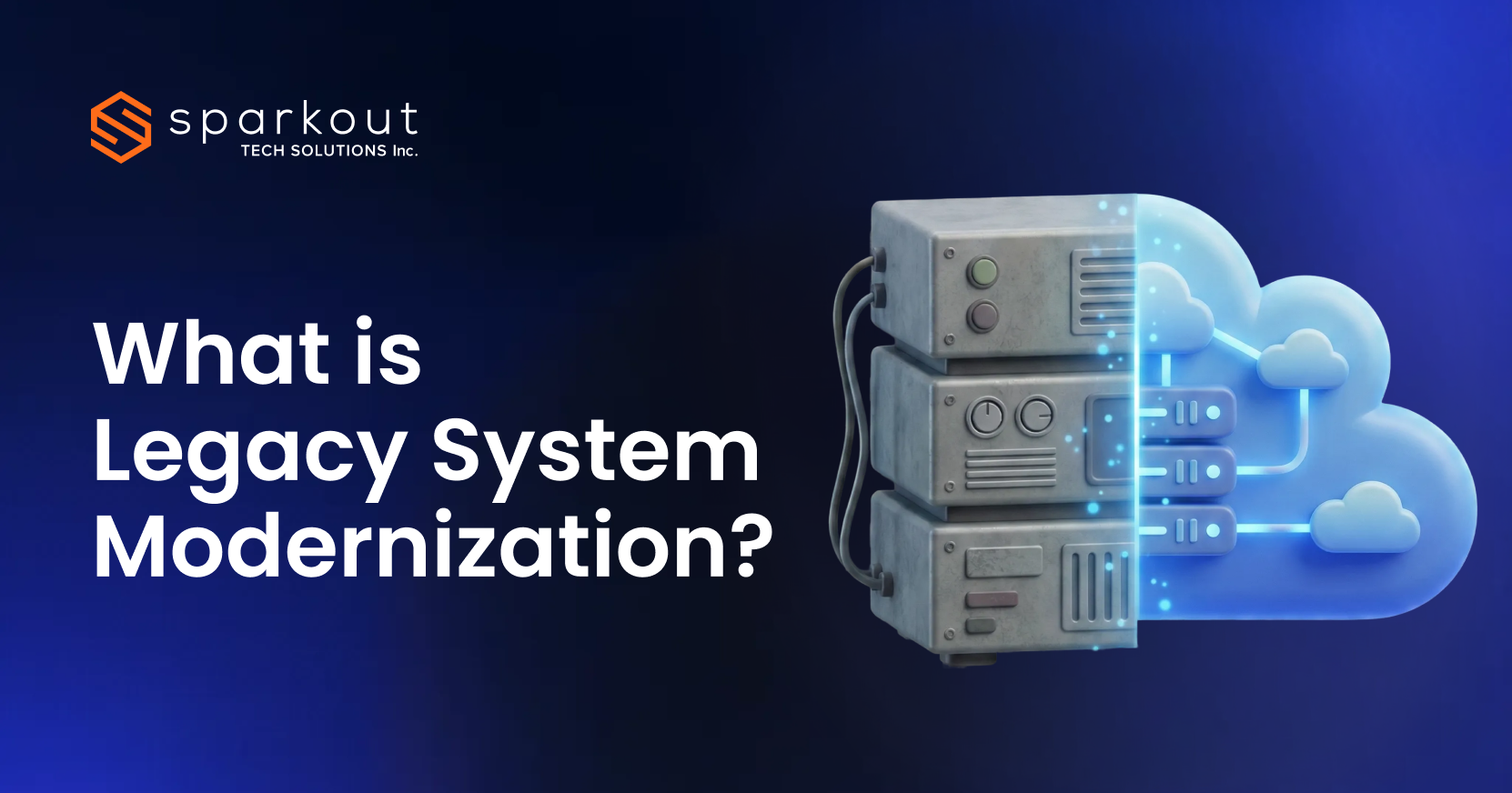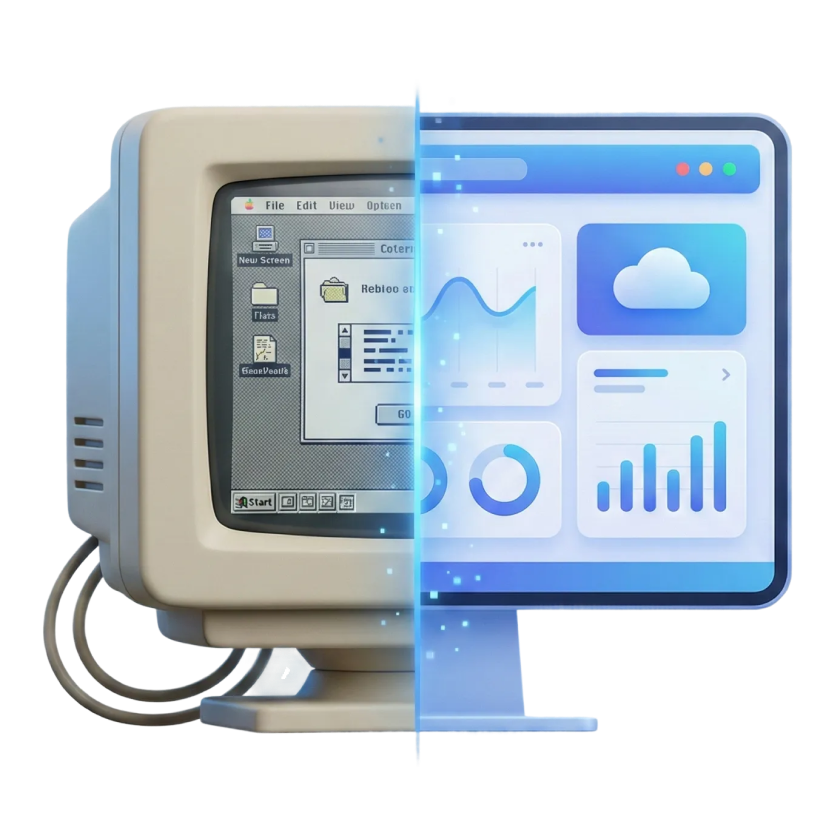



Legacy systems aren't dead, they're just old to use in a modern environment. Even in the big 2026, most of the businesses are running important things on tech that was built way before AI tools and cloud applications even existed. However, in recent days, every business stuck trying to make the old systems communicate with the new ones, and this is exactly where the chaos starts.
Integrating legacy systems with modern platforms, in short, "legacy system modernization" isn't just about deleting everything and starting from scratch, it's a myth. It's actually about connecting what already works with what's trending, without interfering with your business workflow. While proceeding, you can keep your core systems, plug in modem tools, and make everything move together instead of turning against each other.
This guide shows you everything about how to integrate legacy systems with modern platforms in a detailed way. No theories, no buzzwords, just practical ways to make your old systems operate faster.
What Is Legacy System Integration?
Legacy system integration is the process of connecting already existing or outdated systems with modern platforms, applications, and technologies. So that the systems can work together as a unified environment. Instead of replacing the core systems entirely, legacy integration focuses on enabling communication between the outdated and new technologies through certain frameworks.
To make it even simpler, it allows businesses to keep what still works while upgrading how systems share data and scale with modern digital demands. With a proper legacy integration, businesses can improve system reliability, operational efficiency, and long-term scalability without causing major disruptions to regular business processes.
Why Businesses Need To Integrate Legacy Systems
Legacy systems still power critical operations, but their inability to connect with modern platforms will create limitations. Here are the core reasons why businesses need to integrate legacy systems ASAP.
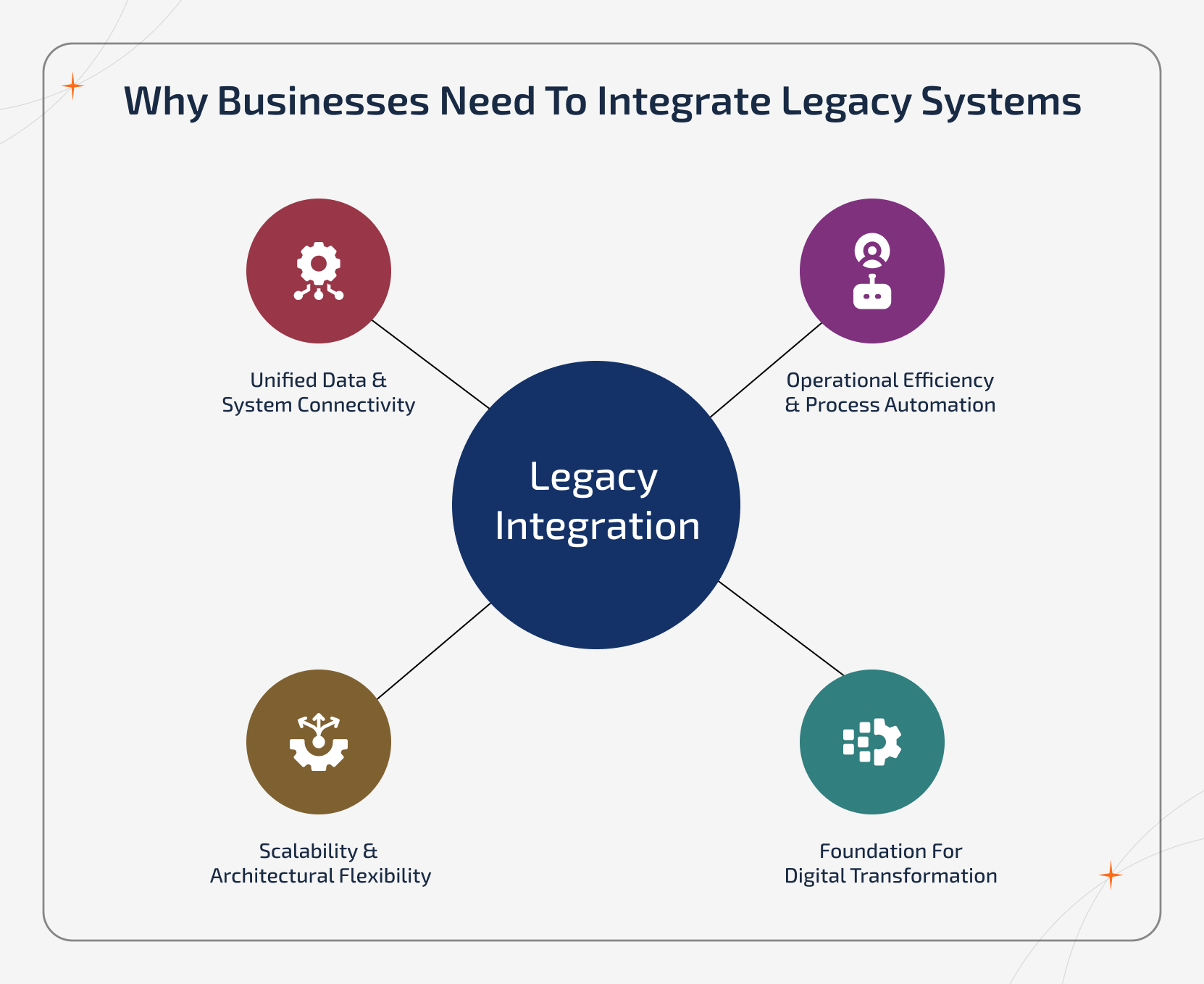
Unified Data & System Connectivity
Most of the legacy systems work from their own perspective, which makes the data messy and even hard to use. In this situation, integration alongside legacy system modernization companies brings everything together so that the information flows properly across systems. This ensures visibility and minimizes confusion across teams.
Operational Efficiency & Process Automation
If the system isn't connected properly, people will end up doing extra work just to make things work. This is where integration plays a major role. It fixes the issue by automating processes and removing unnecessary manual tasks. This gets the work faster, cleaner, and less stressful.
Scalability & Architectural Flexibility
Mostly, older systems aren't built to grow alongside the business. Integration adds flexibility to the process, so that companies can scale, add new tools, and upgrade tech without breaking what already works. This makes the growth feel manageable instead of chaotic.
Foundation for Digital Transformation
Modern tools work properly only when the systems are connected flawlessly. Proper integration lets businesses use cloud, automation, analytics, and new tech without ripping everything apart.
Types of Legacy Systems That Require Integration
To remind you again, not all legacy systems are the same. Some are old but stable, while the others are outdated and fragile. Systems integration is the missing piece of a puzzle, which helps these systems to deliver true value.
Mainframe Systems
Even in 2026, mainframes run important business processes in most of the companies like banking, insurance, and government. They're actually reliable and strong, but being a closed system, they won't naturally connect with modern platforms.
On-Premise Enterprise Applications
Traditional on-premise systems like CRM and ERP platforms were built specifically for internal networks and not for cloud ecosystems. These systems usual;y lack modern APIs and flexibility. With perfect integration, these systems can connect with SaaS platforms cloud tools, and digital services.
Monolithic Applications
These are very large-scale applications where everything is built into a single codebase. Each and every feature, logic, and data handling is closely connected, which makes changes slow, risky, and hard to manage.
Legacy Database
Older databases were created only for basic storage and transactional processing. It's not created for real-time analytics or modern access. They often use outdated structures, formats, and technologies that limit the system's flexibility.
Custom-Built Systems
Custom-built systems, built by top custom software development companies are used for their unique needs years ago. These systems lack documentation, modern architecture, and standardized development practices. This makes them hard to understand, maintain, and update.
Key Benefits Of Successful Legacy System Integration
When legacy systems are perfectly connected with the modern platforms, the impact goes way beyond just technical improvements. It changes the way teams work, how data moves, and how the business grows.
Faster Operations
A connected system eliminates a bunch of unnecessary steps in your daily routine. The data moves automatically and allows teams to spend less time fixing issues and more time getting the work done.
Better data Visibility
When systems are connected, the data literally stops being scattered everywhere. Finally, teams can see the full picture instead of jumping between spreadsheets and platforms.
Lower Operational Risk
When the systems work together properly, there are only fewer breakdowns, errors, and failures. Businesses face lower downtime, fewer data issues, and fewer technical issues. This makes the daily operation more predictable and much easier to manage.
Business Scalability
Business will grow flawlessly when the systems are connected properly. Modern tools, platforms, and services can be integrated without compromising the overall system's reliability.
Long-Term Sustainability
Besides patching the old systems regularly, integration created a stable digital base that can evolve as time moves on. Also, with integration, businesses can keep improving, updating, and adapting without rebuilding everything from scratch.
Major Challenges In Legacy System Integration
Connecting outdated systems with modern platforms isn't a piece of cake. Legacy platform modernization does comes with certain limitations and challenges that can make the integrations difficult. Understanding the challenges below helps businesses to plan smarter and avoid sudden surprises.
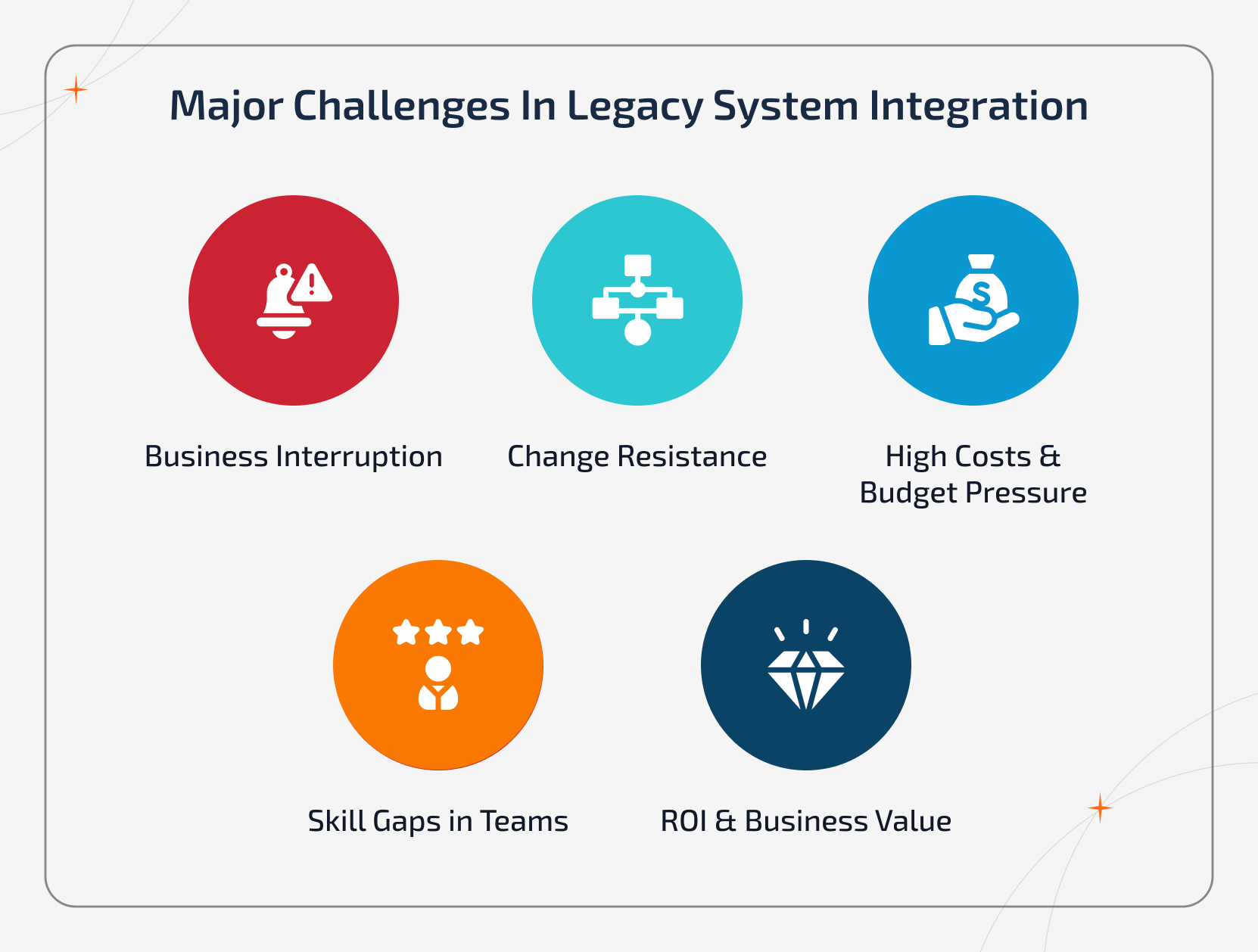
Business Interruption
Integration projects can interfere with the day-to-day operations. System shutdowns, downtime, and workflow interruptions can affect customer service, productivity, and revenue if they're not managed properly.
Change Resistance
The employees are already used to the old systems and workflows. Now, new integrations can feel confusing, disruptive, and unnecessary to teams. This will create resistance and low adoption.
High Costs & Budget Pressure
System integration isn't cheap. While proceeding, businesses will face a budget overrun from tools, consultants, system upgrades, and training. Without any proper planning, budgets can easily get out of control.
Skill Gaps in Teams
Many internal teams lack experience working with both the modern platforms and legacy systems at the same time. This skill gap will slow down the project and increase dependence on outsourcing companies.
ROI & Business Value
Project leaders usually struggle to measure the real business value of integration projects. If the results aren't defined clearly, the project will lose direction, priority, and executive support.
Top Strategies to Integrate Legacy Systems With Modern Platforms
Besides treating integration as one big project or headache, work smart and break it into clear strategic layers. Each one solves a different issue and keeps the transformation stable. Here's how to integrate systems using strategies.
Stabilize Before You Integrate
Before integrating anything, businesses need to stabilize their existing systems. This means fixing critical issues, cleaning messy data, and eliminating the obvious system risks. Meanwhile, integration on top of the broken system always multiplies problems.
Build Connection Layers
Instead of interlinking the systems directly, businesses can create integration layers between old and new platforms. This will keep the systems in a flexible structure, easier to manage, and less fragile when changes happen.
Modernize in Small Phases
Don't push yourself, trying to transform everything at once. Split the process into stages, like one system, one process, or one function at a time. This will reduce risk, protect daily operations, and make the progress measurable.
Prioritize Business Impact
Keep in mind that not every old system needs to be integrated first. Act smartly and focus on what creates the most business value and not what looks ancient. You should focus on the high-impact areas first.
Align Tech With Business Goals
The system that you're about to integrate should solve business problems, not just technical ones. Each and every connection must support growth, efficiency, customer experience, and scalability, not just system upgrades.
Step-By-Step Process To Integrate Legacy Systems
A legacy system works well only if each and every step is treated like a controlled process, not a rushed transformation. Every step builds stability, clarity, and structure, so the business can move forward without breaking the daily operation. Here's an algorithm for how to integrate legacy systems easily.
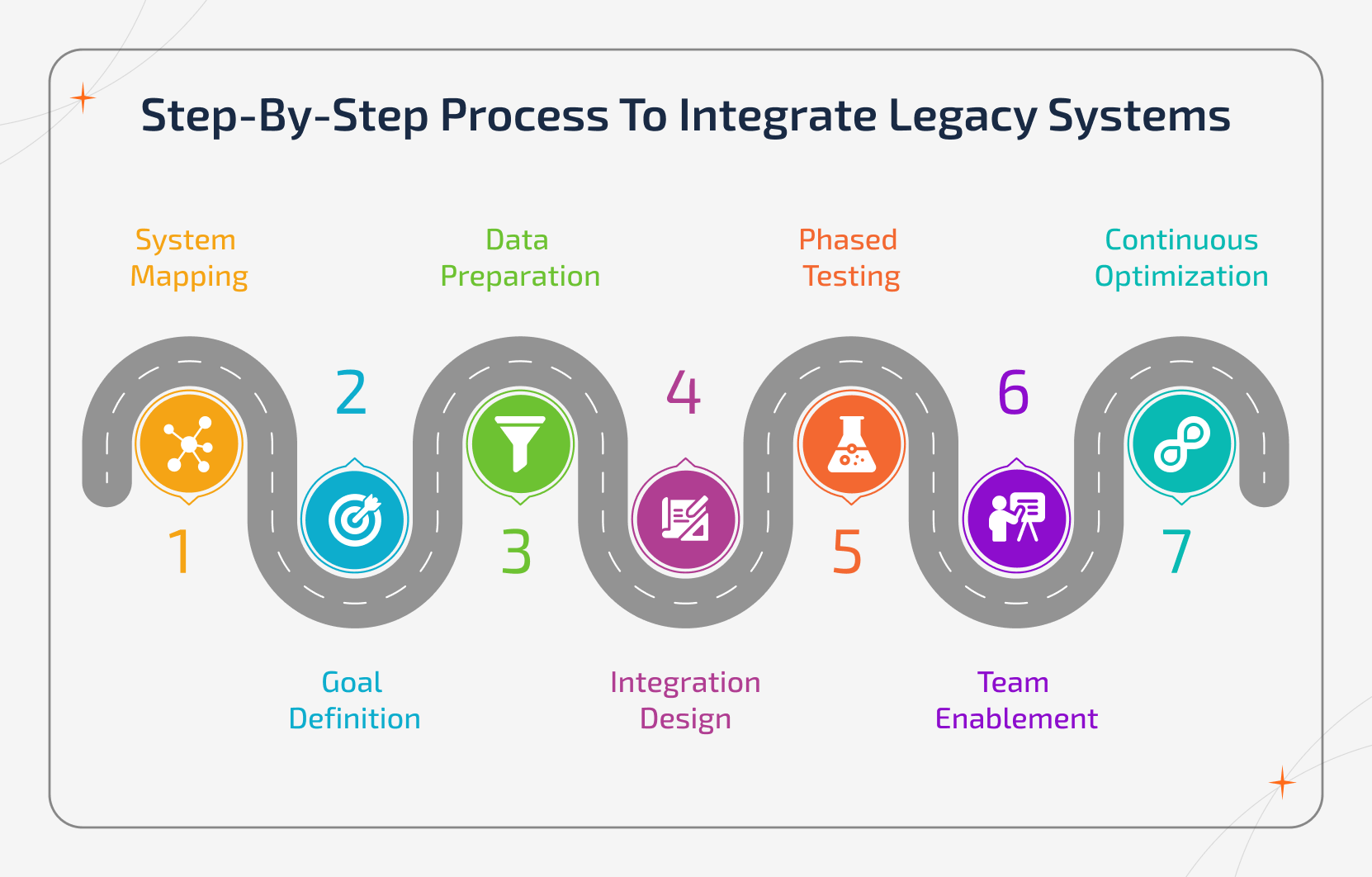
Step 1: System Mapping
Start the legacy system integration process by mapping your existing systems, processes, and data flows. Learn what systems exist, what they do, and how they're interconnected. You'll struggle to integrate if you don't understand the system.
Step 2: Goal Definition
As a next step, you must identify what outcomes matter the most, faster operations, better data access, lower costs, and scalability. This keeps the entire project focused and valuable.
Step 3: Data Preparation
Further, standardize formats, remove duplicated data, and fix inconsistencies before the systems are about to connect. Clean and error-free data makes every process smoother.
Step 4: Integration Design
Decide how exactly the systems must communicate. For that, choose the structure, data movement paths, and connection logic. This is where the architecture decisions begin to shape long-term stability.
Step 5: Phased Tasting
After that, begin with a single system or process. Test integrations in a controlled environment before scaling the system, which prevents potential failures and boosts confidence.
Step 6: Team Enablement
Employees matters as much as the system. So, you have to encourage your internal teams to adapt the new workflows and expand the connections as the business grows.
Step 7: Continuous Optimization
Keep track of how everything is performing in real time, fix problems as they show up, and keep improving how systems and workflows run. As business expands, keep building new connections and expand teh integrations, so that your businesses won't fall apart.
Tools and Technologies to Integrate Legacy Systems
Usually, the legacy system is built across different layers, each solving a specific problem. So, a robust integration setup is needed for a business to combine multiple technologies that work together.
1. API Management Layer
This specific layer controls how the systems communicate, share data, and expose services securely.
- Postman
- WSO2
- Azure API Management
- Apigee
- MuleSoft
- Amazon API Gateway
2. Middleware & Integration Platforms
Here are the tools and technologies that act as a bridge between old systems and modern platforms.
- TIBCO
- Informatica
- IBM Integration Bus
- Apache Camel
- SnapLogic
- Boomi
3. Data Integration & ETL Tools
These tools are responsible for handling data movement, synchronization, and legacy system transformation.
- Apache NiFi
- Talend
- Stitch
- Apache Airflow
- Matillion
- Fivetran
4. Messaging & Event Systems
They can handle real-time data flow between the systems.
- Apache Kafka
- NATS
- Amazon SQS
- RabbitMQ
- Google Pub/Sub
- ActiveMQ
5. Cloud & Platform Services
These tools provide an infrastructure layer for modern integration.
- Red Hat OpenShift
- Docker
- Kubernetes
- Google Cloud Platform
- Microsoft Azure
- AWS
6. Monitoring & Security Tools
These tools protect systems and keep the integration stable and secure.
- Okta
- Auth0
- New Relic
- Splunk
- Datadog
- HashiCorp Vault
Legacy System Integration Cost Breakdown and Timeline
Understanding the cost and timelines of the legacy system integration and legacy software modernization services helps businesses plan smarter and avoid sudden surprises. This breakdown shows what exactly to expect at each phase.
| Phase | What's Included | Cost Range | Typical Timeline |
|---|---|---|---|
| System Assessment | Auditing data flows, identifying risks, and dependencies | $5,000 - $25,000 | 1 - 3 weeks |
| Architecture Planning | Integration design, platform selection, data flow structure | $10,000 - 20,000 | 2 - 4 weeks |
| Data Preparation | Migration planning and data cleaning | $8,000 - $15,000 | 2 - 6 weeks |
| Integration Development | API building, pipelines, and middleware setup | $20,000 - $80,000 | 1 - 4 months |
| Testing & Validation | System testing, data validation and security checks | $5,000 - $25,000 | 2 - 4 weeks |
| Training & Adoption | Team training, workflow onboarding, and documentation | $3,000 - $15,000 | 1 - 2 weeks |
| Deployment | Go-live, product rollout, and system stabilization | $5,000 - $12,000 | 1 - 2 weeks |
| Maintenance & Optimization | Monitoring, updates, and performance tuning | Ongoing operational cost | Continuous |
Security, Compliance & Risk Management Considerations to Integrate Legacy Systems
The following section highlights the importance of safeguarding the data, maintaining regulatory requirements, and minimizing operational risks. This ensures that your integration is secure and resilient from day one.
- Data Protection: Make sure that the sensitive business and customer data stays secure during integration.
- Regulatory Compliance: Ensure you follow industry-specific rules like HIPAA, GDPR, and financial regulations.
- Access Control: Manage user permissions to restrict unauthorized access.
- Threat Detection: Identify and mitigate the security risks before they even impact operations.
- Disaster Recovery: Ensure you have backup and recovery plans to minimize any downtime in case of any issues.
Real-World Example of A Legacy System Integration (COBOL)
One of the best examples of legacy system integration is from the financial services realm. Here, a major bank was running its core operations on a decades-old "COBOL-based mainframe". Even though the system was stable, it couldn't support modern customer channels, including mobile banking or personalized digital services, without proper integration.
Rather than ripping and replacing the entire core system, the bank made a smart move by integrating the legacy system with a modern application using APIs and middleware. They did wrapped the existing core banking functions with a modern API layer that could communicate with digital channels like mobile apps and web portals.
This allows real-time access to customer accounts and transaction data without touching the core logic directly.
As a result, the bank could launch new digital services faster, improve customer experience, and maintain system stability and compliance.
Checklist: Future-Proof Your IT Infrastructure With Modern Integration
The checklist below shows how to integrate legacy systems and make your IT systems ready for the future. By integrating legacy and modern platforms, you can scale and automate without disruption.
✅ Merge modern and legacy systems so that your future setup can adapt as your business evolves.
✅ Add new applications or platforms while keeping your existing system intact.
✅ Interlink on-premise systems with cloud services for better efficiency and easy access.
✅ Make the process automated to reduce manual work and errors.
✅ Ensure you prepare for emerging technologies without disrupting the current operations.
Why Choose Sparkout to Integrate Legacy Systems
By partnering up with Sparkout tech, you can get reliable legacy system modernization services that can easily connect your legacy and modern systems effortlessly and ensure smooth operations with minimal disruption.
Seamless System Connectivity
Our team at Sparkout ensures that your legacy systems and modern applications communicate with each other smoothly with legacy modernization solutions. After the partnership, there are no sudden crashes or data loss. Just a smooth flow that keeps the business humming.
Customized Integration Solutions
Each and every business is different, so is the system. Sparkout builds integration strategies with application modernization services, specifically for your setup, avoiding generic mistakes that fail halfway.
Reduced Operational Downtime
Upgrading and interlinking systems can be risky, but Sparkout's phased and well-planned approach with cloud modernization services keeps the downtime to a bare minimum. Your internal team can keep working while our experts upgrade quietly in the background.
Expert Technical Team
Our technical expertise give relief to legacy systems. From old-school mainframes to trending applications, they know all the quirks and pitfalls, so you don't have to stress anymore.
Future-Proof Architecture
Sparkout doesn't just patch things together. They actually design integrations that actually scale with your business. So, when there's a growth or new tech emerges, your systems will be ready.
Bottom Line
The Future of the modern business depends upon connected and flexible systems. By linking legacy systems with modern platforms, organizations can build IT foundations that can adapt, scale, and evolve with the changing market demands.
Instead of being held back by outdated infrastructure, businesses move forward with such systems that actually support innovation, growth, and long-term resilience.
Ready to Modernize Your Legacy Systems Today!
Start your integration journey with our experts, who can turn outdated platforms into future-ready digital infrastructure.